


 support@ourpetsplace.com
A properly fitted dog collar stays secure without pinching your pet's skin or fur. This dog collar size chart shows how to measure the neck, compare common size ranges, and confirm a comfortable fit before you buy.
Shop a comfortable adjustable dog collar after measuring your pet's neck.
A dog collar size chart helps you find the right fit for your pet by matching their neck size to standard size ranges. Most small dogs need 10 to 14 inches, while medium breeds fit 14 to 20 inches, and large dogs often need 16 to 26 inches. To get the best results, use a soft tape to find the neck size and add two inches so the band is snug but not tight. This "two-finger rule" keeps your pet safe and stops the collar from slipping off or rubbing the skin during daily walks. Finding the right size protects your pet and ensures they stay happy while wearing their new gear all day long for their safety.
Dog collar size chart by neck measurement
Finding the right fit for your pet starts with a clear dog collar size chart. While weight can help you estimate a size, the neck measurement is the most reliable way to ensure a safe fit. Recheck the fit often to keep your pet comfortable. Most brands use a standard range from extra small to extra large to help owners shop.
Standard collar size ranges
Most pet collars follow a similar set of size labels based on neck girth. For example, a small dog often has a neck between 10 and 14 inches. If your dog is in between sizes, it is best to choose the larger option to avoid a fit that is too tight. You should always measure your dog's neck girth by wrapping a tape measure around the area where a collar sits.
| Size Label | Neck Size (Inches) | Neck Size (CM) | Common Breeds |
|---|---|---|---|
| Extra Small (XS) | 8" - 12" | 20 - 30 cm | Chihuahua, Toy Poodle |
| Small (S) | 10" - 14" | 25 - 35 cm | Beagle, Pug |
| Medium (M) | 14" - 20" | 35 - 50 cm | Cocker Spaniel, Bulldog |
| Large (L) | 16" - 26" | 40 - 66 cm | Labrador, Golden Retriever |
| Extra Large (XL) | 20" - 28" | 50 - 71 cm | Great Dane, Mastiff |
How to use the size chart
To use this chart, take a snug measurement of your dog's neck. Experts at PetMD suggest adding one to two inches to that number for a better fit. This extra space ensures the collar is not too tight against the skin. You should be able to fit two fingers between the collar and your dog. If you are measuring for a collar for the first time, keep the tape level and flat.
Choosing the best collar width
The width of the collar is just as important as the length for your pet's safety. Wider collars help spread out pressure on the neck, which is helpful for big dogs that pull on the leash. Small dogs often do better with narrow collars so they do not feel too much weight or bulk. Always check the size options on the specific product page, as each brand may have small differences in its sizing rules.
How do you measure a dog for a collar?
Measure around the part of your dog's neck where the collar normally rests. Keep a flexible tape level and snug without pulling it tight, record the measurement, then compare it with the exact product size guide.
Getting a good fit starts with a correct neck measurement. You want a collar that stays on safely but does not pinch or rub your dog's skin. To find the best size, you will need a flexible cloth tape measure. If you do not have one, a piece of string and a ruler will work just as well. This simple step helps you choose the right collar and protect your pet's comfort.
Best tools for measuring
A soft tape measure is the top choice for this task because it wraps easily around your dog's curves. If you use a string, mark the spot where the ends meet and then lay it flat against a ruler to get the length. Always measure twice to confirm the number before buying or adjusting a new collar. Using the right tools leads to a safer fit for any breed.
- Find the widest part of your dog's neck. This is usually near the base, just above the shoulders.
- Wrap your soft tape or string around that spot. Make sure the tape is level and not twisted as you hold it.
- Pull the tape snug but not tight. It should feel like a soft hug around the neck, not a squeeze.
- Add two inches to your final number. This extra space gives your dog room to breathe and move freely.
- Compare your total length to the brand's size guide. If your dog falls between two sizes, it is usually best to pick the larger one.
The two-finger rule
Once you have a new collar, check its fit using the two-finger rule. You should be able to slide two fingers side-by-side between the collar and your dog's neck. If you can only fit one finger, the collar is too tight. If you can fit three or more, it may slip over your dog's head during a walk. Proper sizing is a key part of pet safety, as noted by groups like The Humane Society of the United States.
Adjusting for growth
Young dogs grow fast, so you should check their collar fit every two weeks. A collar that fits well today might become too tight in just a month. For adult dogs, a quick check once a month is enough to account for weight changes or thick seasonal coats. Keeping the fit right helps prevent hair loss and skin sores. It also keeps your dog safe and happy in their daily gear.
How tight should a dog collar be?
A dog collar should be snug enough that it cannot slip over the head, but loose enough to fit two fingers comfortably between the collar and neck. Recheck it after grooming, weight changes, or growth.
Getting the right fit for your dog is key for their safety and comfort. A collar that is too tight can hurt your pet or make it hard for them to breathe. But a loose collar can slip off or snag on things. To find the best fit, use the product's size guide to pick a starting point. Once you have the collar, you must check how it sits on your dog's neck.
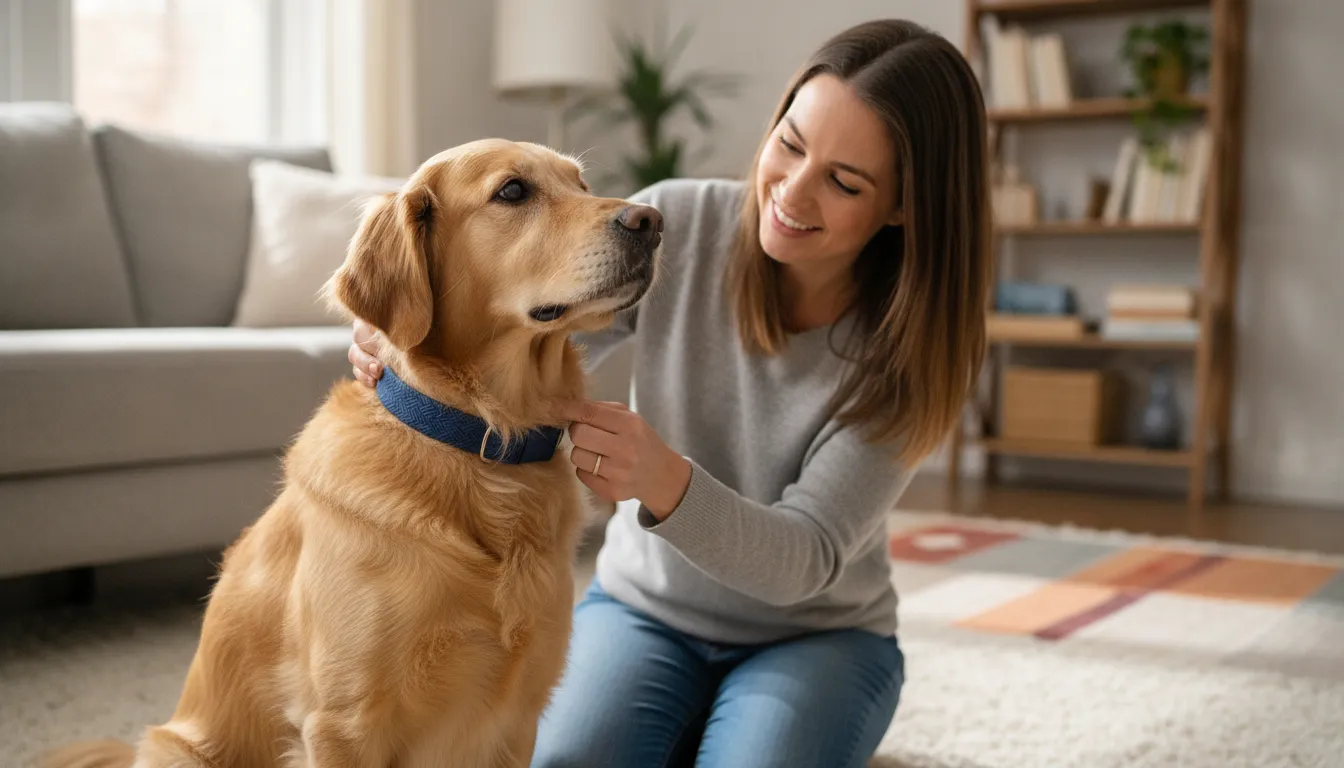
The two-finger fit test
The best way to check the fit is with the two-finger rule. You should be able to slide two fingers side-by-side between the collar and your dog's neck. This gap shows that the collar is snug enough to stay on but loose enough for comfort. If you can only fit one finger, the collar is likely too tight. If you can fit three or more, it is too loose and might slide over your dog's head. This is a standard fit test used by experienced dog owners and pet-care professionals.
A good fit lets your dog move well without skin sores. For safety and comfort, a dog collar should let you put two fingers between the collar and the dog's skin. This step makes sure that the strap does not press against the windpipe. It also stops the collar from rubbing the fur away during the day.
Signs of a poor fit
You should watch for signs that a collar is not right. A collar that is too tight may leave a deep mark in the fur or cause your dog to cough. You might also see red skin or hair loss where the collar sits. If the collar is too loose, your dog might get a paw stuck in it while they play. A loose fit also makes it easy for a dog to back out of the collar during walks. This can lead to a lost pet and is a big safety risk.
Weight shifts or thick winter coats can also change how a collar fits. Adult dogs should have their collar fit checked often to ensure safety, especially after big weight changes. The American Kennel Club says to check the fit for adult pets on a set plan. If you see your dog acting odd or scratching at their neck, check the tightness again.
When to recheck the fit
Your dog's neck size is not always the same. Puppies grow fast and need frequent checks to keep them safe. A pup should have their collar fit checked every two to four weeks as they grow. This helps you move up to the next size before the old one gets too tight. You can also recheck the fit after your dog gets a groom or a bath. Wet fur or a new cut can make the collar feel loose or tight.
It is also a good idea to check the collar after a long hike or a trip to the park. Hard play can cause a collar to shift or loosen. Making these quick checks part of your walk plan keeps your pet happy. Our Pets Place has many comfortable collar options that are easy to change for a perfect fit at a low price.
Choose the right collar width and style
Picking the best collar involves more than just length. You also need to think about width and style to keep your pet safe. While the product size guide helps you find the right length, the width of the band affects how much pressure sits on your dog's neck. A collar that is too thin might hurt a large dog, while one that is too thick can be heavy for a small pup.
Find the best width for your dog
The width of a collar should match your dog's size and strength. Wider collars are often best for large or strong dogs because they help spread out pressure. This prevents the collar from cutting into the neck if the dog pulls. Small breeds usually need a narrow band, often about 5/8 inch wide, to stay light and comfy. Most medium dogs do well with a standard 1-inch width.
Match style to your dog's needs
Think about your dog's daily life when picking a style. Flat collars with a buckle or clip are the most common and are great for holding tags. If you have an active pet, you might look for properly fitting dog collars with built-in safety features like LED lights. For dogs with thick fur, leather is a top choice because it is durable and less likely to mat the hair. You can also get a comfortable leather engraved pet collar to keep your contact info clear and quiet.
Check for hardware and comfort
Check the hardware before you buy. Metal buckles are strong for big dogs, while plastic clips are light for small ones. Always verify the fit with the two-finger rule to ensure your pet is happy. According to PetMD, you should be able to fit one or two fingers between the collar and the skin. This ensures the collar is snug but does not choke your pet. If your dog is still growing, an adjustable style is the best way to save money and keep them safe.
How often should you resize a puppy collar?
Check a puppy's collar fit every two weeks because neck size can change quickly during growth. Adjust the collar when the two-finger space shrinks, and replace it when there is not enough adjustment room.
Puppies grow at a very fast rate. Their bodies change every week as they age. Because of this, you must check their collar size often to keep them safe.
Experts at the American Kennel Club say to check the fit every two to four weeks. This helps keep your pet safe and comfy while they grow. It also lets you catch any changes before the strap gets too tight.
A puppy can double its weight in a very short time. This means their neck size will also go up fast. If you do not check the fit, the collar could hurt their skin.
It might even make it hard for them to gulp or breathe. Checking the fit twice a month is a good habit for every new pet owner to have.
How fast do puppies grow?
Most small breeds grow up fast. Large breeds may grow for a much longer time. During the first few months, a puppy can outgrow its collar with ease.
Check your chosen brand's size guide to see the neck measurement range for each size. Small collars often fit necks from 10 to 14 inches. This helps you know when it is time to move up to a larger size.
Why fit matters for safety
A tight collar is not just a comfort issue. It can lead to health risks for a young dog. On the other hand, a loose collar can slip off.
This is a big risk if you are out on a walk. Checking the fit often keeps your dog safe from these risks. It also helps them get used to the feel of a collar as they grow up.
Checking the two-finger rule
The best way to see if a collar fits is the two-finger rule. You should be able to slide two fingers between the strap and your dog's neck. This space ensures the fit is snug but not too tight.
If you can only fit one finger, the collar is likely too small. If you can fit three or more, it is too loose and needs a fix.
Tips for a smooth adjustment
Always follow the adjustment steps while your pup is standing still. You can use a treat to keep them calm while you work. If the collar has a buckle, move it to the next hole.
For slide-on styles, pull the fabric to make it larger for a better fit. This small change helps how your pet feels throughout the day.
When to buy a new collar
Most puppy collars allow you to change the size. But in time, your pup will outgrow the whole thing. You should buy a new one when the current collar is on its last hole and still feels tight.
It is wise to look for a model that offers a wide range of sizes. This saves you money since the collar will last longer as the dog grows.
Be careful when using old collars from other dogs. A collar that fit a small breed might be too thin for a large breed pup. Stronger dogs need a wider strap to help spread pressure around the neck.
This keeps them from getting hurt if they pull on the leash. Always pick a collar that matches your dog's current weight and build for the best results.
What to check before buying a dog collar
Before buying a dog collar, confirm your dog's current neck measurement, compare it with the product-specific size range. Check the band's width and hardware, and allow room for the two-finger fit test. For a growing puppy, choose an adjustable range with space to resize.
Buying the right gear for your pet is a key part of being a good owner. Before you click the buy button, you should take a few minutes to check the fit and build. This helps you get the best value for your money. At Our Pets Place, we want to help you find a comfortable, practical collar that works for your pup.
Compare your dog's size to the guide
Every brand has its own way of sizing pet gear. You should not guess the size based on what you bought in the past. Instead, look at the exact guide for the product you want to buy. Most brands give a range of inches for each size. When you compare an adjustable leather collar, make sure your dog's neck measurement falls within its stated range.
You should use a soft tape to get the right neck size. Wrap it around the part of the neck where the band will sit. Add one or two inches to this number to make sure the fit is not too snug. This simple step helps you pick the right size from the start. It is a much better way to shop than just guessing by the weight of your dog.
Look for high quality and safety
A good collar must be strong enough to hold your dog during a walk. You should look at the buckle and the D-ring where the leash clips on. Make sure the stitching is tight and does not have loose threads. If you have a large or strong dog, a wider band is a smart choice. These wider bands help spread the pressure around the neck so your dog stays safe.
Once the collar arrives, you must check the fit using the two-finger rule. You should be able to slide two fingers between the band and your dog's neck. This space ensures the band is snug but does not choke your pet. If you can fit more than two fingers, the gear is too loose. If you cannot fit two fingers, it is too tight.
Think about future growth and fit
If you have a puppy, they will grow fast. You should check how their gear fits every two to four weeks. A collar you can adjust is a great way to save money because it grows with your pup. For adult dogs, a quick check every few months is enough to keep them safe. This ensures they stay comfy as they age or gain weight.
We know that buying pet gear online can feel like a risk. That is why we offer a 30-day money-back promise on our products. You can buy with peace of mind knowing you can return it if the fit is not right. Our goal is to give you a strong build at a low price. This way, you can care for your pet without stress or high costs.
Measured and ready to shop? Explore Our Pets Place Best Sellers for popular pet gear at value-focused prices.
Frequently Asked Questions
How do I know what size collar to get for my dog?
Finding the right size starts with measuring your dog's neck. You should measure the area where the collar sits near the shoulder blades. Many brands use weight to group sizes, but neck size is more exact. According to the AKC, you should always check the brand's own size chart to match neck size to the weight range. This ensures a safe and comfy fit for your pet.
How do I measure my dog for a collar?
Use a soft cloth tape measure to find your dog's neck size. Wrap the tape around the neck where a collar often rests. Make sure your dog stands straight and looks forward during this task. This helps you get a right number without any extra slack. Once you have the snug measure, add one or two inches. This extra space makes sure the collar is not too tight and stays comfy for daily wear.
What is the two-finger rule for dog collars?
The two-finger rule is a simple way to check if a collar fits well. After you put the collar on, try to slide two fingers between the band and your dog's skin. The collar should feel snug but still allow your fingers to fit underneath. This check ensures the collar is secure enough to stay on while keeping your dog safe and happy. If you cannot fit your fingers, the collar is too tight and needs a quick change.
How often should I resize my dog's collar as they grow?
Puppies grow very fast, so you should check their collar fit every two to four weeks. As they get bigger, you will need to loosen the collar to keep it safe. Adult dogs do not grow as much, but you should still check the fit once in a while. This is very important if your dog's weight changes. Checking often prevents the collar from becoming too tight or rubbing against their skin as they grow or age.
Ready to find the perfect fit for your dog's collar?
A well-fitted collar helps keep your dog comfortable and secure on every walk. Measure first, compare the product's size options, and use the two-finger test as soon as the collar arrives.
Ready to choose your dog's next collar? Shop the comfortable leather engraved pet collar or explore an LED safety collar.


