


 support@ourpetsplace.com
A bored indoor cat can quickly turn into a messy house guest. Play and hunting help stop these habits. New ways to move keep your cat happy while protecting your home.
Shop interactive cat toys for playful indoor days.
Interactive cat toys are key tools that help indoor pets stay healthy through daily play by giving items that range from simple wands to smart balls. Research shows that higher levels of playfulness and frequent games are linked to a better quality of life for cats by meeting their hunting drive. Owners should look for tough parts that stand up to sharp claws while offering sight, sound, or erratic movement to keep a pet focused and active. Using these toys in a set routine prevents boredom and reduces stress for indoor pets who spend most of their time inside a home or apartment. They provide a simple way to build a strong bond between owners and pets through shared fun and exercise while keeping the house safe from claws.
Interactive cat toys at a glance
Choosing the right stimulating cat toys for indoor cats can help keep your pet active and happy. Play is not just a way to pass the time for cats. Research shows that frequent play helps improve the life of house cats, as reported by scientists at the NIH. Since every cat is unique, you may need to try a few types of toys to find what your pet likes best.
Types of interactive toys
Most interactive toys fall into a few simple groups. Motion or electronic toys move on their own to catch a cat's eye. Wand toys need you to join the fun, which helps build a strong bond with your pet. Puzzle feeders make cats work for their food, which is great for brain health. You can also find interactive plush catnip toys that offer a mix of textures and scents to keep cats curious for longer.
Using a variety of toys helps mimic how cats hunt in the wild. This type of play is vital because a lack of play can lead to signs of stress. Daily play sessions can also help stop bad habits by giving your cat a healthy way to use their energy. Many owners start with smart interactive cat ball toys because they give exercise even when you are not at home.
Toy guide and tips
When you shop for new toys, think about how your cat likes to play. Some cats love to chase fast things, while others like to pounce on quiet objects. It is also wise to check if a toy needs you to watch your pet while they use it. Safety is always a top priority. Most quality toys are built to last, but you should still check them often for any loose parts.
| Toy Type | Best Use | Supervision | Things to Note |
|---|---|---|---|
| Electronic | Solo play | Low | Needs power or charge. |
| Wand Toys | Bonding time | High | Best for active jumping. |
| Puzzle Feeders | Brain health | Low | Use with dry treats. |
| Catnip Plush | Relaxed play | Low | Scent may fade fast. |
| Smart Balls | Exercise | Medium | Best on hard floors. |
Buying toys should be a simple task. At Our Pets Place, we focus on items that offer real value. This means you can find good options that fit your budget. Our Pets Place offers a 30-day money-back guarantee, so you can shop with peace of mind. Finding the right mix of toys will help you build a fun and healthy day for your indoor cat.
Why motion and electronic toys keep indoor cats engaged
Motion and electronic toys keep indoor cats engaged by recreating the unpredictable movement of prey. Rolling, darting, and softly chirping toys invite stalking, chasing, and pouncing, which support physical exercise and mental stimulation. Rotate these toys regularly and use them in clear, safe spaces to maintain interest.
Indoor cats need to move to stay healthy and happy. Since they do not hunt for food, they rely on play to use their natural skills. High levels of play help improve a cat's quality of life and can reduce stress. Using stimulating cat toys for indoor cats keeps their minds sharp and their bodies active.
How movement starts the chase
Cats are born to hunt. Their eyes and ears pick up small, fast moves. Electronic toys often move in ways that act like real prey, like a bird or a mouse. These smart interactive cat ball toys can roll, zip, and change paths. This random motion stops a cat from getting bored and keeps them guessing where the prey will go next.
Many of these toys also make soft sounds. Chirps or squeaks can grab a cat's focus from across the room. These sounds act as a dinner bell for their hunting brain. When a cat hears a toy, they often start to stalk and pounce right away. This cycle of hunting and catching is a key part of their daily life.
Safe play and easy care
Helpful features make these toys better for pet owners. Most options use batteries that you can charge again. This saves you money and is better for the earth. You should look for toys made of tough, safe plastics that can take a lot of biting and scratching. Strong toys are a smart buy because they last much longer through rough play.
Safety is also key when choosing where to put these items. Place them in open areas where your cat has room to run and jump. Avoid spots near stairs or sharp corners. It is best to check the toys often for loose parts or wear. Keeping play areas clear and toys in good shape helps your cat stay safe while they have fun.
Why you should rotate toys
Even the best toy can lose its charm if it is always there. If a cat sees the same toy every day, they might stop playing with it. Rotating your stock of automatic rolling cat toys keeps the fun fresh. Put most toys away and only leave two or three out at a time. Change them every few days to spark new interest.
This method makes every toy feel like a new gift. It also helps you see which types of motion your cat likes best. Some cats prefer fast moves, while others like slow rolls. By watching how they play and swapping toys out, you can build a play routine that keeps your pet fit and active for years.
How to make wand play more rewarding
Make wand play more rewarding by moving the lure like real prey, allowing time to stalk, and giving your cat regular chances to catch it. Use short daily sessions, vary speed and direction, then finish with a small snack. Always store strings and wands safely after supervised play.
Wand toys are more than just a bit of string on a stick. They are some of the best stimulating cat toys for indoor cats because they allow for direct play. This type of active play is key for a happy life. In fact, studies show that daily games lead to a better life for pet cats. When you lead the game, you help your pet stay fit and sharp.
Mimic the hunt
A good wand session should feel like a real hunt. Cats are natural hunters that like to stalk, pounce, and bite. To keep them keen, you must move the toy like a small bird or mouse. Do not just wave the toy in their face. Instead, pull it away and hide it behind a box or chair. This makes your cat use their brain to track the prey. These types of interactive cat toys work best when they act like things cats would find in the wild.
Build a bond through play
Playing together also makes your bond stronger. Studies show that when owners play with their cats each day, the bond score between them goes up. It is a simple way to show your pet love while giving them the play they need. You do not need to spend hours on this. Just ten or fifteen minutes a day can make a big change in how your cat acts and feels.
Steps for better play
To get the most out of your time, follow these easy steps. Using the right ways turns a simple toy into a strong tool for health.
- Pick a toy that matches your cat's style. Some cats love feathers that fly, while others like small interactive plush catnip toys that crawl along the floor.
- Start the game by moving the toy slowly. Think about how a bug moves or how a bird hops from spot to spot.
- Let your cat stalk and wait. The wait is just as fun for them as the chase itself.
- Allow your cat to catch the toy every now and then. If they never catch it, they might get sad or stop the game.
- End the hunt with a small snack. This gives them a sense of success and mimics the reward of a real hunt.
- Put the wand away in a safe spot when you are done. String and small parts can be a risk if a cat chews on them while you are out.
Keep in mind that safety comes first. Check your toys for loose parts or worn string before you start. If you want to try new styles, check out our group of Cats supplies for more ideas. Our Pets Place pairs value-focused prices with a 30-day money-back guarantee. Daily play keeps your cat from getting bored or stressed, which leads to a calm home for everyone.
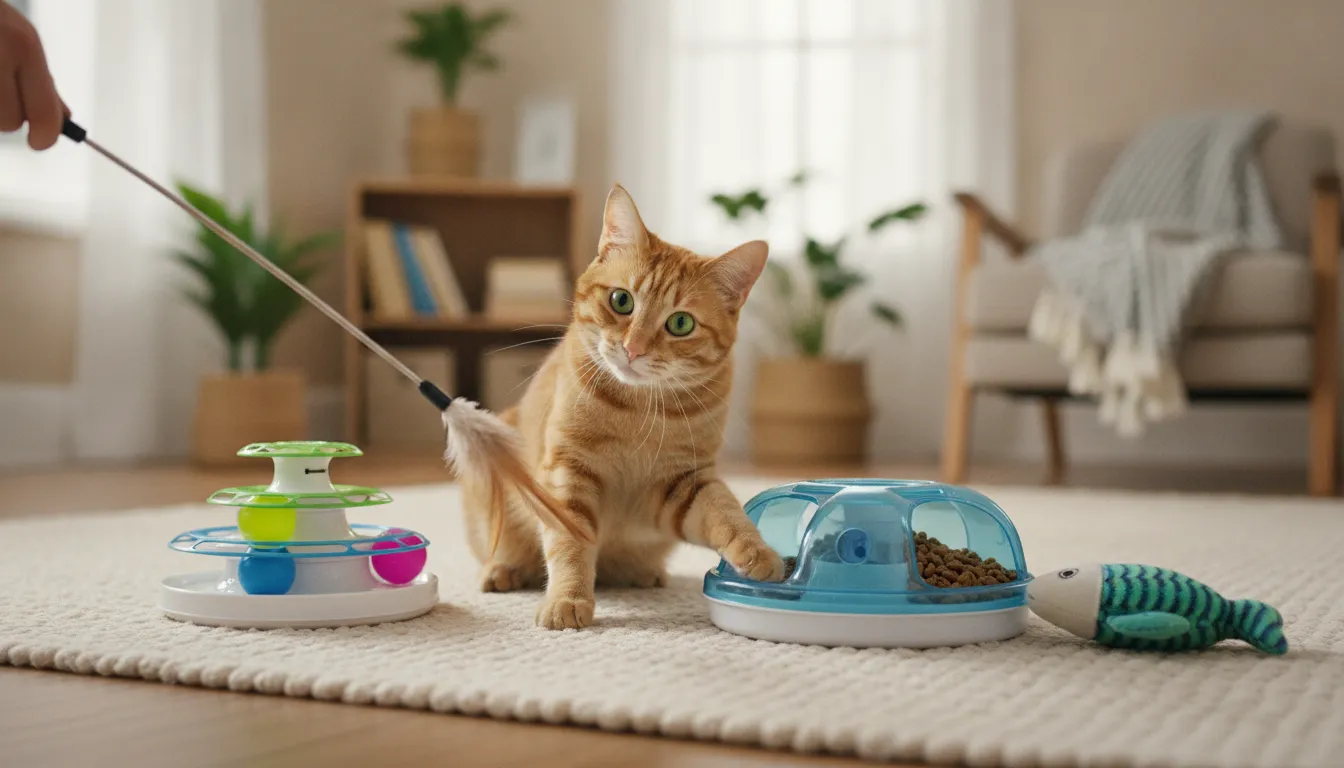
When should you choose puzzles or catnip toys?
Choose puzzle toys when your cat needs mental work, slower feeding, or a task that earns a treat. Choose catnip or silvervine toys for scent-led solo play, kicking, and relaxed fun. Many indoor cats benefit from both, so match the choice to current energy, habits, and mood.
Picking the right toy for your cat can feel like a big task. Cats have unique moods and needs, just like people. Some cats love to work for their food, while others just want to relax and roll around with a soft toy. Choosing between a puzzle feeder and a catnip toy often depends on what kind of fun your cat wants. Each toy type serves a different goal for indoor pet health.
Puzzle toys for mental work
Puzzle toys and treat-giving items are great for cats who enjoy a hard task. These tools make your cat use their brain to get a reward. Most puzzle toys hold dry food or treats inside. Your cat must paw at the toy or move parts around to get the food to fall out. This process mimics how cats hunt in the wild. They must think, wait, and move with care to catch their prey.
These brain-working games are perfect for cats who eat too fast. They also help pets that seem bored or restless. Since higher playfulness levels are linked to a better quality of life for cats, these puzzles provide vital care. You can start with simple puzzles and move to harder ones as your cat learns the game. This keeps the routine fresh and exciting for your pet.
Scent based play with catnip
Catnip and silvervine toys offer a different type of fun. These toys focus on the sense of smell rather than mental work. Many cats react to catnip by rolling, rubbing, or jumping around. It can turn a quiet afternoon into a high-energy play session. If your cat does not care for catnip, you might try silvervine. This plant is a common choice that works for many cats who ignore plain catnip.
Scent-based toys like interactive plush catnip toys are easy to use for solo play. Your cat can toss them around or carry them from room to room. These items are often plush and soft, which makes them good for kicking and biting. Scented toys can help a shy cat feel more at ease in their home. They provide a simple way to add variety to your cat's daily life without needing you to lead the game every time.
Matching toys to your cat's mood
When you buy stimulating cat toys for indoor cats, think about your pet's habits. A high-energy cat might love a puzzle that keeps them busy for twenty minutes. A calm, older cat might prefer a catnip mouse that they can snuggle with. You do not have to choose just one type. Most cats gain from having a mix of both puzzles and scent toys to stop boredom.
Give new toys slowly to avoid stress. Put a puzzle toy down for a few minutes and show your cat how it works. For catnip toys, let your cat sniff them first. If they show interest, you can leave the toy out for them to enjoy. Watch how your cat plays to see what they like best. Giving your pet different ways to play helps them stay active and happy in a small home.
Shop value-focused cat toys for every play style.
What should you look for before buying interactive cat toys?
Before buying interactive cat toys, match each option to your cat's play style, your available space, and the level of supervision required. Check seams, cords, small parts, battery covers, cleaning needs, and return policies. Prioritize durable, safe designs that offer repeat value instead of novelty alone.
Match the toy to your cat's play style
Start with the way your cat already likes to play. A stalker may enjoy a toy that slips behind furniture, while a pouncer may prefer a wand or moving target. Cats that work hard for treats may take quickly to a puzzle feeder. Choosing by play style is more useful than buying the loudest or most complex option.
Think about your home, too. A fast rolling toy needs clear floor space. A tall track or puzzle needs a stable spot where it will not tip. In a multi-cat home, offer more than one play station so a shy cat does not have to compete for access.
Check safety, strength, and upkeep
Look closely at seams, cords, feathers, bells, and small parts before each play session. Put wand toys and loose strings away after supervised play. Select a size your cat cannot swallow, and stop using any toy that cracks, sheds pieces, or exposes a battery.
A toy that is easy to clean can be a better value over time. Check whether fabric parts can be washed and whether hard surfaces are easy to wipe. For electronic toys, compare battery needs, charge time, noise, and how easily the power switch can be reached.
Buy for value, not just novelty
A practical toy should fit your budget and earn repeat interest. Review the materials, size, care directions, and return policy before buying. A simple wand or sturdy ball may deliver more play than a costly gadget if it better matches your cat.
Start with one or two different toy types, watch how your cat responds, and build from there. You can also browse the cat collection for value-focused ideas without filling your home with toys your cat may ignore.
How can you build an enrichment routine that lasts?
Build a lasting enrichment routine by mixing short shared play sessions with safe solo toys, puzzles, and regular rotation. Watch which movements and textures hold your cat's interest, then adjust the schedule to fit your household. Inspect every toy during rotation and remove damaged pieces before reuse.
Mix solo play with time together
A useful routine does not depend on one perfect toy. Combine independent toys for busy moments with wand play or rolling games you lead. This gives your indoor cat chances to stalk, chase, pounce, search, and solve small problems across the day.
Short play sessions are often easier to repeat than one long session. Try a few minutes before breakfast, another active game later in the day, and a calm puzzle or kicker toy in the evening. Watch your cat's body language and stop if play turns tense or your cat walks away.
Rotate toys to renew interest
Leaving every toy on the floor can make even a good collection feel ordinary. Keep a few safe solo toys available, then swap other items every few days. When an old toy returns, its sound, shape, or movement may feel interesting again.
Rotation also helps you learn what works. Note whether your cat prefers toys that flutter, roll, hide treats, make a soft sound, or move in short bursts. Use those clues when choosing the next toy instead of guessing from trends alone.
Adjust the plan for your household
In a multi-cat home, each cat may need a separate chance to play. One cat might rush toward a wand while another watches from a safe spot. Give each pet room and avoid forcing shared play. Place puzzles and solo toys in more than one area so access is fair.
Check toys as you rotate them. Remove loose pieces, frayed strings, or damaged battery covers. A routine should stay simple enough to maintain, safe enough to repeat, and varied enough to keep your cat curious.
Why does my cat ignore new toys?
Cats often ignore new toys because the movement does not match their preferred hunting style, the sound feels frightening, or too many available choices reduce novelty. Introduce unfamiliar toys slowly, test different motions, and keep only a few options out at once. Short, patient sessions can build confidence and interest.
It can be a letdown when you buy a fun toy and your cat walks away. This is common with many indoor pets. Cats are picky by nature, and their interest in stimulating cat toys for indoor cats often depends on how the toy moves or smells. If a toy sits still, your cat may not see it as prey. Indoor cats need play that mimics hunting to stay happy and active.
Too much choice
If your cat has access to every toy all the time, they may lose interest. Leaving out a large pile of items can lead to choice fatigue. To fix this, try a toy rotation. Keep only two or three items out at once and hide the rest. Bringing out a hidden toy later makes it feel new again. This simple change helps maintain your cat's focus on their smart interactive cat ball toys or wands.
Wrong play style
Every cat has a unique way of playing. Some like to chase things on the ground, while others prefer to leap for birds. If your cat ignores a wand, they might prefer automatic rolling cat toys that move across the floor. Variety is key because play helps cats feel less stress. In fact, play is a top way to check on cat welfare and health. Short play sessions of about five minutes often work best to keep them keen.
Fear or noise
Sometimes a new toy is just too loud or scary. Fast motion or high-pitched sounds can startle a shy cat. If your cat hides from a moving toy, try to introduce it slowly. Place the toy near their favorite spot without turning it on. Let them sniff it and get used to its shape first. High play levels are linked to a better quality of life for cats, so being patient pays off. If a toy still does not work, the Our Pets Place 30-day money-back guarantee can help.
Frequently Asked Questions
Are interactive cat toys good for indoor cats?
Yes. Interactive cat toys are vital for pets that live inside. These items provide the mental action and physical work that indoor cats need to stay healthy. These toys help cats use their natural hunting skills. This reduces boredom and prevents stress. Daily play is also a great way for owners to bond with their pets. It keeps cats active, which helps them maintain a healthy weight and sharp mind over time.
How do I keep my cat happy for hours?
The best way to keep a cat happy is to use a mix of different toys. Smart, automated items like the 360 Smart Automatic Rolling Pet Ball can provide fun when you are busy. These toys move on their own to mimic real prey. You should also rotate your toys so they always feel new. Using a variety of motion, puzzle, and scent toys keeps your cat keen and engaged. Short play sessions of about five minutes often work best for cat interest.
Can interactive toys improve my cat's health?
Play is a key part of keeping a cat happy and well. Studies in PubMed show that high levels of play lead to a better life for house cats. Daily games can also lower the risk of bad habits linked to stress. By using toys that help with jumping and chasing, you help your cat stay fit and slim. Active play also helps build a stronger bond between you and your pet. This makes for a much more joyful life for your cat.
How can I make my own interactive cat toys?
You can make simple toys at home with basic items. A cardboard box with holes can become a fun puzzle for treats. You can also tie a feather or scrap of cloth to a string and stick for a DIY wand. While these are great for quick fun, store-bought toys are often stronger. According to People, a good toy should last through at least two weeks of daily play. Safe, well-made toys help ensure your cat plays without any risk of harm.
Explore cat toys and trending deals for more playful days.
Find a new favorite for your indoor cat
The best play plan starts with a toy that fits your cat's natural style. Mix active chase games, solo puzzles, and calm play to keep each day fresh without overspending.
Shop cat toys and trending pet deals at Our Pets Place to find practical picks for more playful days at home.


