


 support@ourpetsplace.com
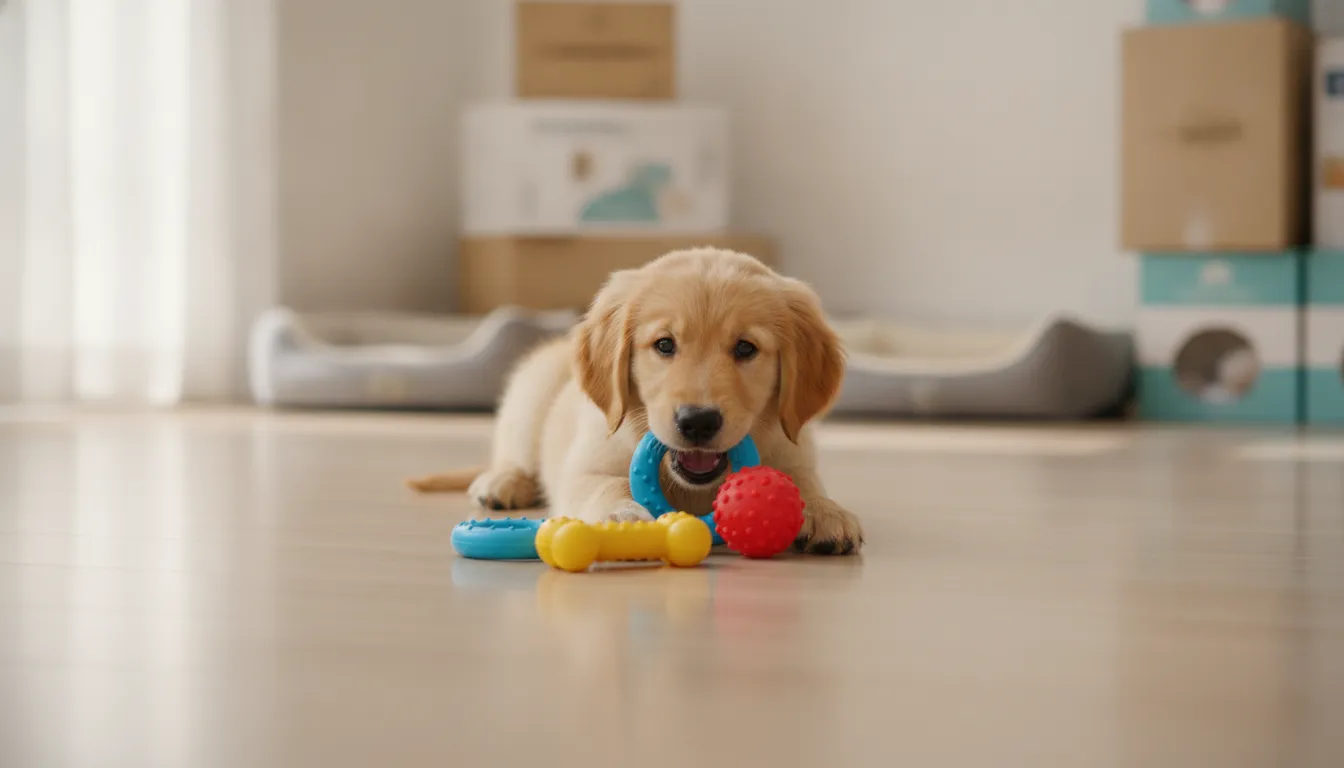
The best puppy teething toys match your puppy's age, mouth size, and chewing style. They should be large enough not to swallow, sturdy enough for supervised play, and comfortable enough that your puppy chooses them over shoes, furniture, or other household items.
Shop puppy teething toys and dog toys at Our Pets Place
Choose puppy teething toys by checking three things first: age, size, and chewing behavior. A young puppy often needs softer, easier-to-grip toys. A stronger chewer may need a more durable shape that still has some give. Inspect any toy before use. Watch during play, and replace it when cracks, frays, sharp edges, or missing pieces appear. If your puppy has bleeding gums, a broken tooth, appetite changes, or signs of pain, ask a veterinarian instead of trying to solve the issue with another toy.
This guide is written for new puppy owners who want a practical, value-focused way to shop. It explains how teething changes over time, how to size a toy, which materials deserve a closer look, and how to build a small rotation without overbuying.
Puppy teething toys by age and stage
Puppy teething is not one single day. It is a changing process, and the right toy can change as your puppy grows. Many puppies start getting baby teeth when they are only a few weeks old. By the time they come home, they may already be exploring everything with their mouths. Adult teeth usually come in over the next several months, and many puppies complete most tooth changes by about six to seven months.
Early chewing and first toys
Early toys should be simple, flexible, and easy to carry. Look for a puppy-sized toy that your dog can grip without fitting the whole item deep inside the mouth. A toy that is too small can become a swallowing risk. A toy that is too large may frustrate a young puppy and sit unused.
Start with a small mix instead of a full basket. A softer chew, a textured toy, and one interactive option can show you what your puppy actually enjoys. Owners of smaller breeds can also review this guide to small dog supplies and sizing before choosing tiny toys.
Changing teeth and stronger chewing
As baby teeth loosen and adult teeth come in, chewing can become more frequent. Your puppy may mouth toys longer, bite with more pressure, or look for new textures. This is the right time to inspect toys more often and replace worn pieces before they become unsafe.
Do not choose by age label alone. Match firmness and shape to the puppy in front of you. A gentle puppy may still prefer flexible toys. A stronger chewer may need a tougher shape such as the Molar Cleaning Dog Bone, used with supervision and checked often.
Adult teeth and lasting habits
Once adult teeth are in, toy selection becomes more about size, jaw strength, and play style. Some dogs like steady gnawing. Others want a toy they can chase, bounce, or carry. Keep the habit of checking toys before and after play. A toy that was safe last month can become too worn or too small as your puppy grows.
- Choose a size your puppy cannot swallow.
- Check for sharp edges, missing chunks, loose fibers, or cracks.
- Use each toy as the maker directs.
- Supervise chewing, especially with a new toy.
- Contact a veterinarian for dental concerns or signs of pain.
How to match teething toys to puppy size
A safe size match lets your puppy pick up, carry, and chew the toy without swallowing it. Check the toy against your puppy's current mouth, not the expected adult size of the breed. Puppies grow quickly, so review the fit every week during the heaviest chewing months.
Small puppies and toy fit
Small puppies need toys that are light enough to carry but not so tiny that they disappear into the mouth. Avoid small balls, thin pieces, and toys with parts that can be chewed off. If your puppy can fit the entire toy behind the front teeth, move up a size.
Smaller puppies also tire faster, so keep sessions short. Offer one toy, watch how your puppy grips it, and remove it when play turns into shredding. This helps protect the toy and gives you a better read on chewing style.
Medium and large puppies
Medium and large puppies may need more durable toys sooner, but durable does not mean rock hard. A toy that is too rigid can be uncomfortable. Look for a shape that has enough strength to hold up during supervised play while still matching your puppy's age and chewing style.
Large-breed puppy owners can compare broader gear choices in the big dogs care guide. Then choose chew toys by the puppy's current habits, not only the adult size you expect later.
What toys are good for teething puppies?
Good puppy teething toys give your puppy an appropriate place to chew while you supervise. Soft rubber, rope toys, textured chew toys, chillable toys, treat-holding toys, and interactive toys can all be useful. The best choice depends on your puppy's mouth size, chewing strength, and favorite type of play.
Common toy types compared
Use this table as a starting point. Product labels still matter, and supervision matters every time.
| Toy type. | Good for. | What to check. |
|---|---|---|
| Soft rubber. | Gentle chewing and easy gripping. | Flexible material with no cracks. |
| Rope. | Supervised tug and texture variety. | Tight fibers with no loose strands. |
| Textured chew toy. | Puppies that like varied surfaces. | No sharp edges or loose pieces. |
| Interactive toy. | Puppies that need movement and engagement. | Check size, batteries if included, and durability. |
| Chillable toy. | Short cooled chewing sessions. | Use only as the maker directs. |
Interactive options
Interactive toys can help puppies focus their energy on play instead of household items. A bouncy or rolling toy may work well for puppies that like movement. For example, the Interactive Pet Toy Bouncy Chew Ball for Dogs gives active puppies something to chase and mouth during supervised play.
Treat-holding and puzzle-style toys can also make short chewing sessions more engaging. The goal is not to leave your puppy alone with a toy for hours. The goal is to offer a safe, interesting choice while you watch and guide the habit.
Compare Our Pets Place Best Sellers for puppy-friendly toy ideas.
Choose by chewing style, not just cuteness
A cute toy can catch your eye, but chewing style should guide the purchase. Watch your puppy during a short play session. The right toy should keep your puppy interested without breaking down quickly, pinching the mouth, or becoming small enough to swallow.
Gentle nibblers
Gentle nibblers mouth toys slowly, carry them from room to room, or chew for a few minutes and stop. They may enjoy softer rubber, plush shapes made for supervised play, or a light textured toy. The Bear Plush Squeaky Chew Toy can fit puppies that enjoy softer supervised play, but plush toys should be checked often for tears or loose stuffing.
Busy chewers
Busy chewers return to the toy again and again. They may need a tougher material, a thicker shape, or a toy that adds movement. These puppies often do better with a small rotation because one toy can wear down quickly when it is used all day.
Power chewers
Power chewers need closer supervision and more frequent replacement checks. Avoid toys that splinter, shed pieces, or become sharp. If your puppy damages a toy quickly, remove it and choose a more suitable option. If chewing seems connected to dental pain, bleeding, or a broken tooth, contact a veterinarian.
Safety checks before you add to cart
A low price only helps if the toy fits and holds up during use. Before you add puppy teething toys to your cart, check listing photos, size details, material notes, age guidance, and care directions. This quick review can help you avoid toys that are too small, too hard, or too easy to destroy.
Size and construction
Start with size, then look at how the toy is built. Avoid toys with tiny removable pieces, weak seams, loose bells, long strings, or thin parts that can be chewed off. If a toy has a squeaker, inspect it often and remove the toy if the squeaker becomes exposed.
Materials and firmness
No single material is automatically right for every puppy. Rubber, rope, plush, and nylon can all vary widely by design. Use the product's age and chewing-strength guidance. If you are unsure whether a toy is too firm for your puppy, ask your veterinarian for advice.
Cleaning and replacement
Teething toys get wet, dirty, and worn. Choose toys you can clean as directed. Replace a toy when it has deep cuts, sharp edges, frayed fibers, missing chunks, or any part that can come loose. A damaged toy is not a bargain, even if it was inexpensive.
What should you avoid during puppy teething?
Avoid toys that are too small, too hard, too damaged, or not designed for puppies. Also avoid giving old household items as chew toys. A puppy cannot easily tell the difference between an old shoe and a new shoe, so replacement habits matter.
Chews that are too small or too hard
If a toy can fit fully inside your puppy's mouth, it is too small. If the toy feels extremely rigid for your puppy's size and age, choose a softer or more flexible option. Watch how your puppy reacts. Dropping the toy, refusing it, or chewing only one edge may mean the fit is wrong.
Damaged toys
Inspect toys before and after each play session. Remove toys with missing pieces, exposed stuffing, loose threads, sharp points, or deep cracks. This is especially important during teething because puppies may chew longer and harder than usual.
Unsupervised chewing
No chew toy is completely safe without supervision. Stay nearby when introducing a new toy. If your puppy starts tearing pieces off, trade for a safer option and remove the damaged toy. Calm swaps teach better habits without turning the toy into a chase game.
Build a value-friendly puppy toy rotation
Our Pets Place is built for pet owners who want useful products without overpaying. A value-friendly toy rotation helps you buy fewer items with more purpose. Instead of filling a bin on day one, start with a few options that serve different jobs.
Start with four useful roles
A simple starter rotation can include one softer chew, one textured chew, one interactive toy, and one backup toy for cleaning days. This gives your puppy variety while helping you learn what actually gets used.
- Pick one toy for gentle chewing.
- Pick one toy with texture or a different shape.
- Pick one interactive option for short play sessions.
- Keep one backup so a damaged or dirty toy can be removed right away.
Shop for value, not clutter
Browse the Dogs collection for puppy-friendly choices, then compare options in Best Sellers and Trending Deals. Choose toys by fit and use, not by how many you can buy at once.
Explore Trending Deals before building your puppy toy rotation
Rotate toys every few days to keep interest high. Wash toys as directed, retire worn pieces, and keep a short list of what your puppy actually likes. This makes the next purchase easier and helps you avoid repeat buys that do not fit your puppy's chewing habits.
Frequently Asked Questions
What is the best thing for a teething puppy to chew on?
The best thing is a puppy-specific chew toy that fits the puppy's current size and chewing style. Look for flexible, durable materials without loose parts or sharp edges. Supervise each chewing session and replace the toy when it cracks, frays, or becomes small enough to swallow.
What are the main stages of puppy teething?
Puppy teething often moves from early baby teeth, to a full set of baby teeth, to shedding baby teeth, to adult teeth growing in. Timing varies by puppy. Many puppies complete most tooth changes by about six to seven months, but dental concerns should be discussed with a veterinarian.
How can I soothe my puppy during teething?
Offer supervised chewing with flexible puppy teething toys and chillable toys when the maker says they can be cooled. Keep sessions short, inspect toys often, and avoid anything that is too hard or too small. Contact a veterinarian for bleeding, broken teeth, appetite changes, or signs of pain.
Are nylon chew toys safe for puppies?
Nylon chew toys are not equally suitable for every puppy. Check the product's age, size, and chewing-strength guidance before use. Avoid toys that feel too rigid for your puppy, and remove any nylon toy that develops sharp wear, loose pieces, or deep damage.
How many teething toys does a puppy need?
Many new puppy owners can start with three or four options: a softer chew, a textured toy, an interactive toy, and a backup. This keeps shopping practical while giving your puppy variety. Add more only after you know which shapes and materials your puppy uses safely.
Ready to Find Better Puppy Teething Toys?
Choosing the right teething toy is easier when you shop with a short checklist: current age, safe size, chewing style, material, and replacement signs. Our Pets Place helps pet owners compare practical, budget-friendly pet supplies without making the process complicated.
Shop puppy teething toys and dog toy deals at Our Pets Place.
Keep watching your puppy as habits change, replace worn toys quickly, and ask a veterinarian about any dental concern. A smart toy choice supports safer play today and better chewing habits as your puppy grows.


