


 support@ourpetsplace.com
The right enrichment toy earns its keep at mealtime, playtime, or both. Choose by the job your dog needs done, not by the fanciest design.
Shop interactive dog toys and puzzle feeders for value-friendly enrichment.
Dog puzzle toys turn treats or kibble into problems dogs must solve, making them practical tools for mental stimulation, shared play, and busy days. Slow feeders mainly extend mealtime, while broader enrichment toys encourage sniffing, chasing, tugging, or independent activity based on a dog's natural interests. Research shows feeding toys can increase the time dogs spend eating and create a more engaging experience, so regular use can deliver better value. Match the toy to your dog's size, chewing style, skill level, and main need, then choose safe, durable materials and a design you can clean easily. Start with an easy challenge, supervise early sessions, and only raise the difficulty once your dog solves it without frustration.
The real question is not which toy looks smartest, but which one fits your dog and your budget. In Dog puzzle toys: How to choose the right enrichment toy, we compare the features that matter before you buy. That practical comparison starts here.
Dog puzzle toys: How to choose the right enrichment toy
What each toy type does
Dog puzzle toys ask a dog to work out how to reach food, treats, or another reward. Enrichment toys are a wider group that invite sniffing, chasing, chewing, or problem-solving. Slow feeders are meal tools that make dogs work around ridges, pockets, or moving parts to reach their food.
These labels often overlap, so shop by the activity rather than the product name. A treat ball can be both a puzzle and an active toy. A sniffing mat offers a search task without hard moving parts. Research on environmental enrichment for animals also supports watching the dog's response to confirm that an activity provides a real benefit.
A practical match for your dog
Start with age, body size, and mouth size. Puppies and dogs new to puzzles often need a simple task with an easy reward. Older or less confident dogs may also prefer a toy that pays off quickly. Experienced problem-solvers may enjoy sliders, hidden pockets, or several steps.
Next, match the toy to play style. Sniffers may enjoy interactive slow feeder puzzle toy. Dogs that chase may prefer a rolling dispenser. Strong chewers need a sturdy option sized so they cannot swallow it. Slow feeders suit dogs that need a longer, more engaging meal routine.
- For gentle players: Try fabric search mats, soft hide-and-find toys, or simple treat pockets.
- For active players: Look at rolling balls, moving toys, and treat dispensers that reward chasing.
- For food-focused dogs: Compare slow feeders, lick surfaces, and puzzles that hold part of a meal.
- For cautious beginners: Choose an easy puzzle, show the first move, and stop before frustration builds.
Value, safety, and daily use
A useful toy fits both your dog and your routine. Check whether it is easy to fill, clean, and store. Also consider how often you can supervise its use. Watch every dog with a new puzzle at first, then check it often for loose or damaged parts.
Good value is not just the lowest price. A well-matched toy gets regular use and stays interesting when you change the reward or play method. Adjustable puzzles can also give a dog an easier start and a harder task later.
Before buying, compare the toy's size, material, difficulty, and cleaning needs. Our Pets Place focuses on practical choices for budget-conscious pet owners. Browse the interactive dog toys search page by activity, then choose the simplest option that suits your dog's current skills and play style.
Puzzle toys vs. slow feeders vs. enrichment toys
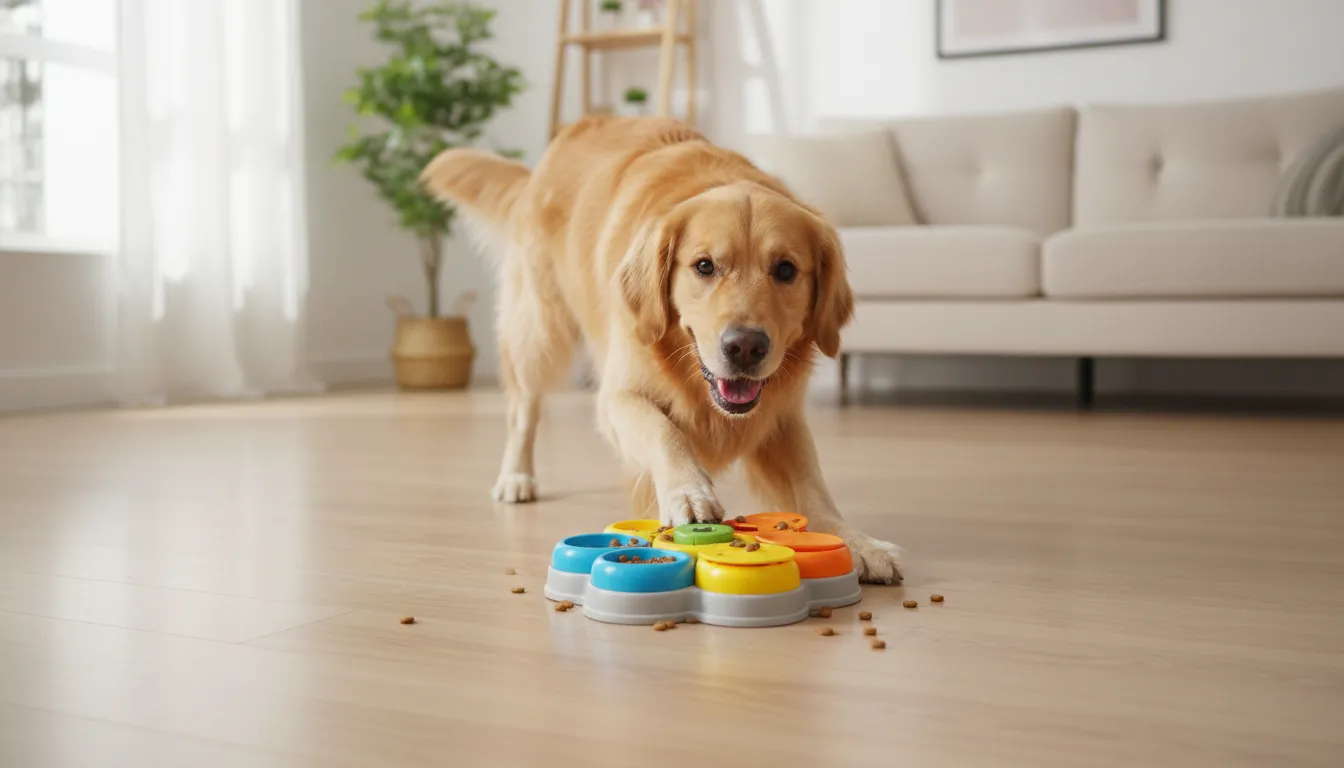
These three product types can overlap, but each solves a different daily need. Dog puzzle toys make a dog work through a task for food or treats. Slow feeders stretch out meals, while broader enrichment toys encourage play, sniffing, chewing, or movement.
Quick answer: Choose dog puzzle toys for problem-solving, slow feeders for longer meals, and enrichment toys for broader play needs like sniffing, chasing, or chewing. If your dog eats quickly, start with a slow feeder. If your dog needs a calmer challenge, start with an easy puzzle or sniffing activity.
The main difference
Choose a puzzle toy when your dog enjoys solving problems and stays interested in food rewards. Sliding pieces, treat compartments, and reward-based games add a clear goal to play. Start with an easy design so your dog learns how the game works.
A slow feeder is the more focused choice for a dog that finishes meals too fast. Research shows that feeding toys can increase eating time and make feeding more engaging. Match the bowl size and groove pattern to your dog's muzzle, kibble, and usual portion.
| Toy type | Best for | What to watch for | Shopping tip |
|---|---|---|---|
| Dog puzzle toy | Problem-solving and reward-based play | Loose parts, poor fit, or excess difficulty | Begin easy, then add harder challenges |
| Slow feeder | Making regular meals last longer | Grooves that are too deep or narrow | Check bowl size and cleaning needs |
| Enrichment toy | Sniffing, movement, chewing, or solo play | Material strength and play style | Pick one built around a favorite activity |
A practical match for your dog
Enrichment toys cover the widest range of activities. They include sniffing mats, active balls, tug toys, and other items that invite natural play. Studies describe added activities and stimuli as environmental enrichment that can improve animal quality of life.
Your dog's habits should guide the choice. A food-focused problem solver may enjoy a puzzle board, while a fast eater may get more use from a slow feeder. A dog that loves using its nose may prefer dog enrichment toys like sniffing pads.
Better value over time
The lowest price is not always the best value. A useful toy should suit your dog's size, play style, and skill level. It should also be easy enough to clean after food-based play.
Look for a design your dog can use often, not just once. Adjustable puzzles can stay useful as skills grow, while simple slow feeders can serve every meal. Supervise the first few sessions and stop use if the toy breaks or causes frustration.
What difficulty level should you start with?
Start with the easiest puzzle your dog can solve after a little guidance. The goal is not to test intelligence. It is to build interest, confidence, and a clear link between an action and a reward.
Quick answer: Most dogs should start with a beginner puzzle that gives fast, visible rewards. Raise the difficulty only after your dog solves the current setup calmly and repeatedly.
Beginner puzzles and easy wins
Level 1 dog puzzle toys usually ask for one simple action. Your dog may roll a treat ball, lift an open flap, or sniff kibble from a mat. A dog enrichment toy like a sniffing pad offers a gentle first challenge.
Make the first attempt easy by leaving treats partly visible or placing them near the moving piece. Show the action once, then let your dog try. Praise calm effort, even if you need to reset the toy several times.
Moving through the middle levels
Level 2 puzzles add a small choice or a second action. A dog might slide a cover, turn a piece, or move one part before reaching food. Level 3 puzzles often combine several actions or hide the path to the reward.
Advanced or level 4 toys suit dogs that stay calm while solving longer sequences. These puzzles may require several steps in the right order. Labels can differ by maker, so watch your dog instead of relying only on the level number.
Increase the challenge after your dog solves the same setup with steady interest and little help. Change one part at a time. You can close more covers, hide treats deeper, or introduce a puzzle with another action.
Signs the challenge needs adjusting
A puzzle may be too easy when your dog empties it at once and stops exploring. It may also be too simple if your dog skips the puzzle method and flips the whole toy. Try a harder setting before buying a new toy.
A puzzle may be too hard when your dog walks away, barks at it, paws without a plan, or starts chewing parts. Step in before frustration grows. Open some sections, use smellier treats, or return to the last puzzle your dog enjoyed.
- Good fit: Your dog stays engaged, tries more than one action, and reaches rewards without frantic behavior.
- Too easy: Rewards disappear with almost no searching, moving, or problem-solving.
- Too hard: Interest fades fast, or calm searching turns into rough biting and repeated force.
Keep sessions supervised and adjust based on your dog's behavior. Research on environmental enrichment for animals says behavior should be watched to check that the activity helps. The right puzzle feels challenging but still possible.
Compare an interactive dog puzzle toy built for treat-based mental stimulation.
Which dog puzzle toys fit small dogs, large dogs, and strong chewers?
The right fit depends more on your dog's body, play style, and bite than breed alone. A useful puzzle should stay stable and let your dog reach each part without strain. Research on enrichment also says owners should watch an animal's behavior to confirm an activity helps. Start with supervised play, then check how your dog handles the toy.
Quick answer: Small dogs need low, easy-to-reach compartments; large dogs need stable bases and larger parts; strong chewers need sturdier materials and close supervision. The safest fit is the toy your dog can use without swallowing, cracking, or forcing parts.
Puzzle toys for small dogs
For a small dog, choose a light puzzle with low edges and parts sized for a small nose and paws. The base should still resist sliding across the floor. Avoid large treat openings that release food too fast. Also avoid loose pieces that could fit fully inside your dog's mouth.
Check that your usual kibble or treats move through the openings without getting stuck. Variable openings can make one toy work with several treat sizes. A soft sniffing mat can also suit dogs that prefer searching over pushing hard parts. See dog enrichment toys like sniffing pads when comparing gentler play styles.
- Look for low, easy-to-reach compartments.
- Choose a stable base that does not tip.
- Confirm every removable part is too large to swallow.
Puzzle toys for large dogs
Large dogs need enough room to use their muzzle and paws without crowding the puzzle. Pick a broad, stable base and larger moving parts. Small sliders may be hard to control, while a light board may flip during play. Treat openings should match larger kibble without releasing a full serving at once.
Size does not always show puzzle skill. A large beginner may do better with a simple treat ball or an easy sliding board. Increase the challenge only after the dog solves the first design calmly. This keeps play rewarding instead of turning the puzzle into a chew target.
- Measure the toy against your dog's mouth and paw size.
- Favor wide bases and sturdy, easy-grip pieces.
- Test the puzzle on a floor where it will not slide.
Safer choices for strong chewers
No dog puzzle toy is truly indestructible. Strong chewers often do better with thick rubber designs than thin plastic boards or plush puzzles. Still, durable does not mean safe for unsupervised use. Remove the toy if you see cracks, sharp edges, torn pieces, or deep bite marks.
Watch the first few sessions closely and redirect chewing toward the puzzle task. If your dog keeps biting instead of solving, choose a simpler design or a toy made for tugging. Compare durable interactive puzzle toys with the same care you use for feeders.
Easy cleaning matters for every size and bite strength. Choose a design you can fully open, wash, rinse, and dry between uses. Check the maker's care directions before using a dishwasher. Trapped crumbs and wet food can make complex parts harder to keep clean.
How to introduce dog puzzle toys without frustration
A new puzzle should feel like a game, not a test. Start when your dog is calm, hungry enough to enjoy a treat, and free from distractions. Plan to stay nearby for the full first session.
Quick answer: Introduce dog puzzle toys by making the first win easy, keeping the session short, and helping only enough for your dog to understand the task. Stop before frustration or chewing starts.
Watch how your dog responds instead of pushing toward a set goal. Research on environmental enrichment notes that behavior should be monitored to check whether an activity benefits the animal. That simple rule can guide every puzzle session.
A simple first session
Make the first win almost effortless. Your dog should learn that touching, sniffing, or moving the toy can release a reward. Use these steps to build interest without causing frustration:
Choose a beginner puzzle that suits your dog's size and play style. Remove loose parts, and check the toy for damage before use.
Let your dog sniff the empty toy while you hold it steady. Praise calm interest, but do not force contact.
Place a favorite treat in an easy-to-see spot. Leave lids open, sliders loose, or treat openings clear for a quick first win.
Show one simple move if your dog seems unsure. Tap or slide the piece once, then let your dog try.
Keep the first session short and end while interest is still high. Put the toy away before your dog starts chewing or walking off.
Repeat the easy setup during later sessions. Add one harder step only after your dog solves the current setup with confidence.
Signs that the puzzle is too hard
Pause if your dog barks at the toy, paws at it with force, chews its parts, or loses interest. Reset one piece to an easier position, or place a treat where it can be found fast. Patience helps your dog connect the puzzle with success.
Supervise each new setup and step in before rough play damages the toy. For a gentle alternative, dog enrichment toys like sniffing pads can offer a simpler search activity.
Building difficulty over time
Increase only one challenge at a time. You might close one lid, tighten one slider, or hide fewer easy treats. If your dog stalls, return to the last setup that worked.
Short, successful sessions build the habit better than one long struggle. Rotate dog puzzle toys to keep play fresh, but introduce each unfamiliar design as if it were new. Always inspect the toy after play and store it safely.
How to shop smart for durable, budget-friendly enrichment
A low price only saves money when the toy lasts and your dog enjoys using it. Start by matching dog puzzle toys to your dog's size, play style, and chewing habits. A gentle food seeker may enjoy sliders or a sniffing mat. A strong chewer needs a sturdier design with fewer exposed edges.
Quick answer: The best budget-friendly enrichment toy is not always the cheapest one. Pick the toy your dog will use often, that you can clean easily, and that fits your dog's current size, skill level, and chewing habits.
Look closely at each product page before adding a toy to your cart. Check the stated material, size, care steps, and intended type of play. Thick parts and simple shapes can be useful durability cues. Still, no puzzle should be treated as a chew toy unless its listing says so.
A practical value checklist
Cleanability matters because food crumbs and wet fillings can settle into small spaces. Choose smooth surfaces and parts you can reach without special brushes. Confirm whether pieces come apart and review the listed wash method. A toy that is easy to reset and clean is more likely to earn regular use.
Next, check treat compatibility. Openings should work with the kibble or treats you already buy, so you do not need extra supplies. Adjustable openings can add flexibility as treats change. Feeding toys can also make meals more engaging by increasing the time dogs spend eating, according to research on feeding enrichment.
Multi-use value can stretch a small pet budget. One well-chosen puzzle may support meals, reward-based training, and quiet play at home. Compare that value with a toy made for one narrow task. Browsing the Best Sellers collection can also show which practical designs other shoppers choose often.
Safety checks come before any deal. Read the size guidance, inspect the toy when it arrives, and watch the first few play sessions. Remove it if parts loosen, crack, or become small enough to swallow. Also check it before each reuse, since even a durable toy can wear down over time.
Skip upsells that do not fit your routine. Extra levels, add-on pieces, or complex features have little value if your dog loses interest. A simple puzzle that suits current skills can be the smarter buy. You can add more challenge later through a different play pattern or filling method.
Before checkout, compare a short list instead of buying the first discounted option. Weigh likely use, care time, safe fit, and expected durability against the price. Review All Products to compare enrichment options with other pet supplies, then choose the item that fills a real need.
Common mistakes to avoid when buying dog puzzle toys
Buying dog puzzle toys based on color or a clever design can lead to a poor match. The better choice fits your dog's current skills, body size, play style, and your cleaning routine. Think about how the toy will work during an ordinary week, not just how it looks online.
Quick answer: Avoid buying a puzzle that is too hard, too small, hard to clean, or built for a play style your dog does not enjoy. Start with one practical option, watch the first sessions, and let your dog's response guide the next purchase.
Choosing the wrong challenge or size
Starting with the hardest puzzle can leave a new player confused instead of engaged. If your dog paws, bites, or walks away without making progress, the challenge may be too high. Begin with an easy action, such as nudging a loose piece, then raise the difficulty after repeated success.
Size and chewing habits matter just as much as skill level. A toy that is too small may be a poor fit for a large dog's mouth. A delicate slider may not suit a dog that tries to chew every moving part. Choose parts that suit your dog's mouth, paws, and usual style of play.
Watch how your dog responds rather than assuming a higher level offers more value. Research on environmental enrichment says behavior should be monitored to confirm the activity provides a real benefit. A good puzzle creates interest and steady effort without causing the dog to give up.
Overlooking cleaning and first-use safety
Another common mistake is treating easy cleaning as an extra rather than part of the buying decision. Food, crumbs, and soft treats can settle into grooves and moving parts. Before buying, check how the toy opens and which areas need hand washing. Make sure each food-contact surface is easy to reach.
Do not assume every new puzzle belongs in unsupervised play right away. Supervise the first sessions so you can see whether your dog solves, carries, or tries to tear the toy. Remove it if parts loosen or the material starts to break. This first check helps you set safe limits for later use.
Looks alone cannot show how a toy will handle your dog's play style. Compare the build of durable interactive puzzle toys with sliders, mats, and feeders before choosing. Also consider whether replacement parts, deep grooves, or fixed sections could make upkeep harder.
Expecting one toy to fix all boredom
One puzzle cannot cover every kind of play or replace walks, training, and time with you. Different designs ask dogs to sniff, push, lick, pull, or work for food. One study found that feeding toys can increase the time dogs spend eating. That benefit does not make one feeder the answer for every bored dog.
Instead, build a small rotation around your dog's interests and daily routine. You might use a simple feeder at mealtime, a sniffing activity during quiet time, and shared play later. Put some toys away between uses so they stay fresh. Then notice which options hold your dog's attention.
Avoid buying several advanced puzzles before learning what your dog enjoys. Start with one suitable option, watch how it performs, and use that result to guide the next purchase. This approach can reduce wasted spending while giving your dog a more useful mix of challenges.
Browse dog toys and essentials that fit everyday pet care on a budget.
Frequently Asked Questions
Are dog puzzle toys good for dogs?
Dog puzzle toys can add mental stimulation, encourage problem-solving, and make food-based play more engaging. Research suggests that feeding toys can increase the time dogs spend eating. The benefit depends on a safe match and a manageable challenge. Watch your dog's response, reduce difficulty if frustration builds, and remove any damaged toy.
What keeps dogs entertained for hours?
No single toy can reliably entertain every dog for hours. Interest depends on the dog's play style, skill level, reward, and energy. A small rotation of treat dispensers, sniffing activities, and shared games usually offers more variety than one puzzle. Start with short sessions, change the filling or setup, and stop before your dog becomes frustrated or begins chewing the toy.
Can puppies use dog puzzle toys?
Puppies can use dog puzzle toys when the design fits their size and current skills. Begin with a simple puzzle that gives quick rewards, and supervise the entire session. Avoid small removable pieces and materials a puppy can tear apart. Keep early sessions short, check the toy for damage afterward, and raise the difficulty only after repeated calm success.
Can dog puzzle toys replace daily walks?
Dog puzzle toys support mental enrichment, but they do not replace daily walks, training, or shared play. These activities meet different needs, including movement, exploration, social contact, and problem-solving. Research describes enrichment as stimuli that can support species-typical behaviors such as physical activity. Use puzzles as one part of a balanced routine built around your dog's abilities.
Can I use regular meals in a dog puzzle toy?
Many food-safe dog puzzle toys can hold part or all of a regular meal, depending on their size and design. Measure the serving before filling the toy so the puzzle does not add extra calories. Confirm that kibble moves through the openings, follow the listed cleaning directions, and supervise until you know how your dog handles the setup.
Ready to Choose Better Enrichment for Your Dog?
Waiting to add engaging play can leave your dog with fewer useful ways to stay busy and may lead to rushed purchases during packed days. Starting now lets you test one practical option, watch how your dog responds over several sessions, and make the next purchase with more confidence. Choose a well-matched puzzle toy, slow feeder, or enrichment toy that fits your routine and budget, then introduce it during a calm, closely supervised session.
Ready to bring more purpose to everyday play? Shop value-focused dog puzzle toys and enrichment products to find an affordable option that suits your dog's needs and your household budget. Start today, then use your dog's response to guide your next choice.


