


 support@ourpetsplace.com
That nonstop squeak is more than noise; it rewards your dog's natural play instincts. A well-matched toy can keep play engaging, but a torn squeaker can quickly become a safety risk.
Shop best-selling dog toys to compare safe, affordable play options before your next squeaky toy purchase.
Why do dogs like squeaky toys? The sharp sound can mimic prey, while every bite gives instant feedback that encourages another bite. Squeaky toys can support mental stimulation, ease boredom, and provide a useful outlet for normal chewing and playful hunting. Research on dog play links preferred objects with predatory behavior, especially toys dogs can change or pull apart. They are good options when matched to your dog's size and chewing strength, inspected often, and used with supervision. Choose durable materials and no loose parts, then remove the toy once seams split or the squeaker becomes exposed. That balance makes an affordable toy safer and more likely to last longer.
Are squeaky toys good for dogs? Usually, yes, when the toy fits the dog and every play session stays supervised. The next section, Why do dogs like squeaky toys?, explains the instincts and quick rewards behind each noisy bite. To make a safe, affordable choice, the path begins with
Why do dogs like squeaky toys?
Dogs like squeaky toys because the sound can tap into prey drive while giving instant feedback during play. Each bite creates a response, so the toy seems active and worth chasing. That quick cause-and-effect loop can keep a dog focused longer than a silent toy.
The high squeak may sound like small prey to some dogs. Research on canine play also supports the wider instinct link. A review of play behavior in dogs found that solo play with objects appears to come from predatory behavior. This helps explain the common chase, grab, shake, and chew routine.
Some dogs seem determined to find and remove the squeaker. That behavior can reflect the dissection stage of predatory play, rather than anger or poor behavior. The same research notes that dogs often prefer toys they can alter or pull apart. Still, every dog has a different play style and level of interest.
Feedback, play, and bonding
A squeaker responds at the exact moment a dog bites down. This immediate sound can reward the action and prompt another bite. It turns a basic chew session into an active game with a clear result. For curious dogs, that feedback may also offer useful mental stimulation.
Squeaky toys can support shared play, too. A person can use one for fetch, short training games, or gentle tug sessions. Adult dogs' social playfulness may help form emotional bonds with their owners, according to the same canine play review. Our guide to the safe dog toy guide can help match play styles with suitable options.
The main reasons dogs enjoy squeaky toys often work together:
- The sound may appeal to natural chase and prey instincts.
- Each squeak gives instant feedback and invites another action.
- Chewing and shaking give dogs a clear outlet for active play.
- Fetch and training games create positive time with their people.
Not every dog loves the same sound, shape, or texture. Some prefer a soft toy they can carry, while others want firmer toys for chewing. An interactive toy with sound can suit dogs that enjoy both sound and hands-on play. Watch how your dog responds, then choose a toy that fits that natural style.
Are squeaky toys good for dogs?
For many dogs, squeaky toys can be a useful part of a balanced play routine. They provide quick feedback, invite active play, and give dogs a safe outlet for natural chewing and chase behaviors. Still, no toy is right for every dog or every situation.
Mental stimulation and stress relief
A squeak responds each time a dog bites or paws the toy. That simple cause-and-effect pattern can hold attention and make solo play more engaging. It also gives an energetic dog a focused activity during quiet time at home.
The answer to why do dogs like squeaky toys often starts with instinct. Research on dog play links object play with predatory behavior and notes that dogs favor items they can change or pull apart. This helps explain why some dogs stay focused on a squeaker or try to remove it. The underlying behavior is part of how dogs engage with toys and people.
For dogs that enjoy the sound, supervised squeaky play may help ease boredom and direct restless energy toward an allowed object. Rotate it with balls, tug toys, and food puzzles so the dog does not rely on one kind of play.
Engagement and training rewards
A favorite squeaky toy can act as a reward during short training sessions. Use a quick squeak or a few seconds of play after the dog follows a cue. This approach may work well for dogs that value play more than treats.
Keep the reward controlled. Put the toy behind your back between attempts, then bring it out after the right response. This keeps the sound meaningful and helps the dog shift attention back to you. Our guide to the choosing safe toys can help owners match play styles with safer choices.
- Use the toy for brief games of fetch, find-it, or tug.
- Pause play if the dog becomes too excited to follow simple cues.
- Offer calm praise when the dog releases the toy on request.
- Store high-value toys between sessions to keep them interesting.
When squeaky toys are not the right fit
Squeaky toys need supervision, especially for dogs that tear fabric or chew through rubber fast. Choose a size that cannot fit fully inside the dog's mouth. Check seams, stuffing, and the squeaker before and after each play session.
Remove the toy as soon as a squeaker, stuffing, or loose piece becomes exposed. A plush toy may suit a gentle carrier, while a strong chewer needs a tougher material. Even a durable toy is not indestructible, so replacement is part of safe use.
Some dogs become tense, guard the toy, or cannot settle after hearing the sound. Others show little interest. In those cases, try a quiet chew toy, movement-based toy, or food puzzle instead. An squeaky dog toy option is best reserved for dogs that can enjoy it without unsafe chewing or distress.
How to choose a safe squeaky toy
A safe choice fits your dog's body, chewing style, and usual play habits. Price alone does not show whether a toy offers good value. Affordable quality starts with a sound design that suits your dog and holds up during normal play.
Match the toy to your dog
Start with size and chew strength. The whole toy should be too large for your dog to swallow, yet easy to carry. A gentle chewer may enjoy soft plush. A strong chewer needs tougher material and firm construction.
Dogs naturally chew both food and non-food items for several reasons, including self-care and social interaction. This makes material choice a safety issue, not just a matter of taste. Research on dog chewing behavior also shows why every toy needs regular checks.
A seven-point safety check
Use this checklist before buying, then repeat the last checks during the toy's life. For more help across toy types, read the guide to choosing the dog toy safety guide.
Check the size. Pick a toy your dog cannot fit fully inside its mouth. Avoid small parts that may come loose.
Review the materials. Look for clear product details and material notes. Skip toys with a strong chemical smell, cracks, or brittle areas.
Match chew strength. Choose soft toys for gentle play and tougher options for hard chewing. No squeaky toy is safe for every dog.
Inspect seams and edges. Tug lightly at seams, ears, tails, and glued parts. Weak spots can open fast once chewing begins.
Check squeaker security. Press the toy and feel where the squeaker sits. Avoid it if the squeaker seems loose or easy to reach.
Supervise the first sessions. Watch how your dog grips, shakes, and chews the toy. Remove it if play turns into fast tearing.
Replace damaged toys. Retire the toy when seams split, stuffing shows, or pieces loosen. Keeping a broken toy is not good value.
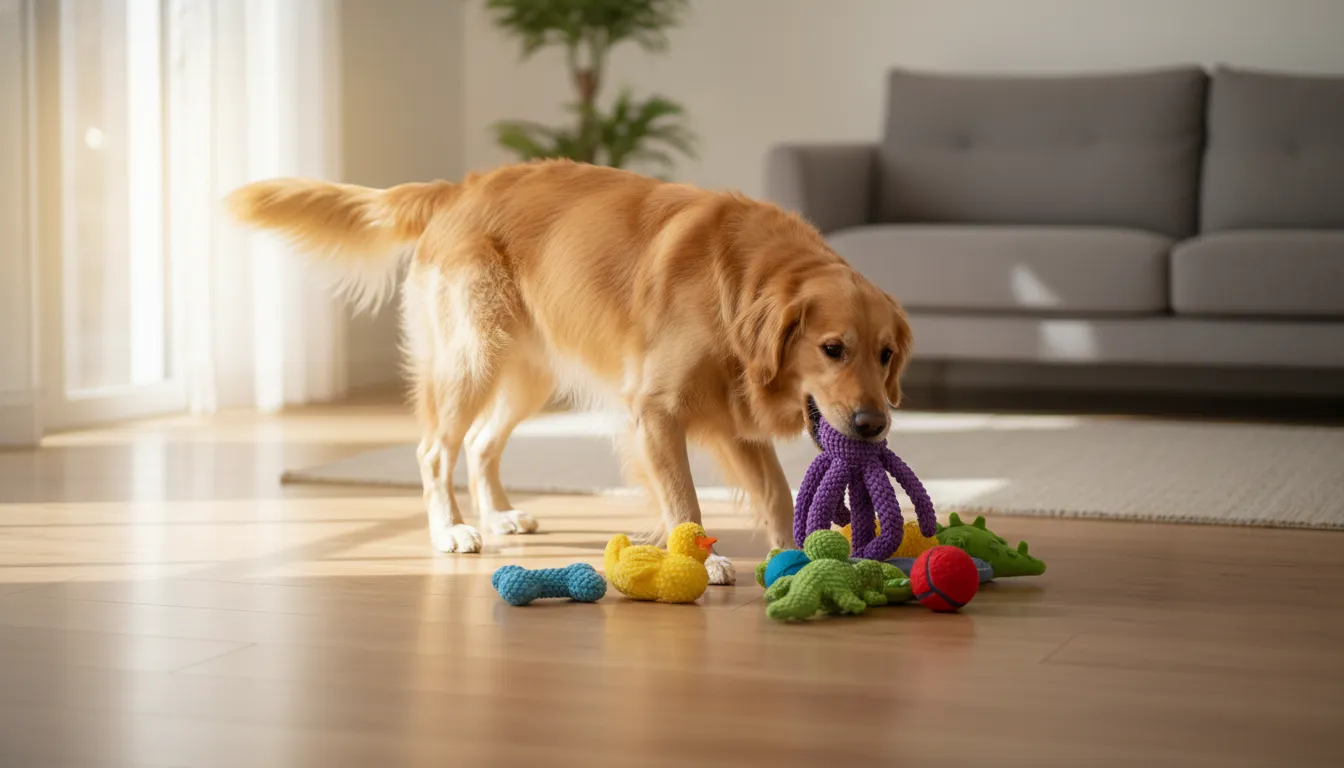
Supervision protects the value
Even a well-matched toy can wear down. Check it before and after play, and keep squeaky sessions within sight. Some dogs focus on reaching the squeaker, so take the toy away as soon as its inner parts become exposed.
Good value comes from choosing the right build, not buying the cheapest option. Rotate a few suitable toys to spread wear and keep play fresh. When shopping, compare size, material, seams, and squeaker placement before adding an engaging squeaky toy to your dog's play routine.
Explore an interactive squeaky dog toy if your dog enjoys supervised sound-based play.
Which squeaky toy style fits your dog?
Choosing the right style starts with how your dog plays, not how cute the toy looks. Size, chew strength, and favorite play habits all matter. Understanding why dogs like squeaky toys helps too, since the sound gives quick feedback during play.
Plush or rubber squeaky toys
Plush squeaky toys suit gentle dogs that enjoy carrying, cuddling, or light games of fetch. Their soft shape is easy to grip, and many dogs enjoy tossing them around. These toys need close watch if your dog likes pulling seams apart. For a specific example, see this plush squeaky toy before comparing size and build.
Rubber squeaky toys often suit dogs that prefer bouncing, fetching, and moderate chewing. They tend to keep their shape better during active play. Still, rubber is not one standard strength, so check the toy after each session. Match its size to your dog's mouth, and avoid any toy that could be swallowed.
| Toy style. | Best fit. | Watch-outs. | Shopping tip. |
|---|---|---|---|
| Plush squeaky. | Gentle carriers and cuddlers. | Torn seams or loose stuffing. | Choose firm stitching and the right size. |
| Rubber squeaky. | Fetch fans and moderate chewers. | Cracks, chunks, or a loose squeaker. | Match rubber strength to chew habits. |
| Interactive or moving. | Curious dogs that need varied play. | Loose parts and overstimulation. | Check controls and supervise use. |
| Durable chew. | Strong, focused chewers. | No toy is fully chew-proof. | Favor simple shapes and inspect often. |
Interactive and moving toys
Dogs that lose interest quickly may enjoy a toy that rolls, shifts, or squeaks as they engage. Movement changes the game and gives them a fresh reason to chase. Interactive squeaky toys can be a useful choice for short, supervised play sessions.
Use moving toys when your dog has room to play without hitting furniture or stairs. Watch the first few sessions to learn whether the motion excites or frustrates your dog. For multi-pet homes, offer enough space and separate toys if dogs guard high-value items.
Durable toys for strong chewers
Strong chewers need a sturdy toy built around their usual bite and play style. Chewing is a basic dog behavior tied to several daily needs, according to research on dog chewing and welfare. A durable squeaky toy gives that behavior a safer outlet, but it still needs supervision.
No squeaky toy should be treated as fully chew-proof. Inspect seams, edges, and squeakers often, especially after hard play. Replace the toy when pieces loosen or the material starts breaking apart. For more help with size, materials, and play habits, use this guide to choosing the safe toy options.
Why do dogs rip the squeaker out?
Finding a toy in pieces can look like bad behavior, but the dog may simply be finishing the game. The squeak draws attention, while tearing and pulling give the dog a clear task. This focused play also helps explain why dogs like squeaky toys.
The dissection instinct
For some dogs, getting the squeaker out is the final stage of pretend hunting. Research on dog play found that dogs prefer objects they can change or pull apart. The toy stops making noise once the squeaker is removed, so the dog may treat the task as complete.
Chewing is also a normal dog behavior tied to food, self-care, and social activity, according to a study of dog chewing. A dog that shreds a plush toy is not being spiteful. It may enjoy the feel of tearing fabric and finding what is inside.
Boredom can make this behavior more intense. A dog with unused energy may spend longer working at seams, tags, or weak spots. Rotating several play options can keep one squeaky toy from becoming the dog's only project.
A better outlet for hard chewers
Match the toy to the dog's usual play style. A gentle carrier may enjoy soft plush, while a strong chewer needs thicker material and firm seams. Size matters too, since a toy should not fit fully inside the dog's mouth.
Supervised play lets the dog enjoy the squeak while you watch for damage. Put the toy away after the session if the dog starts pulling out filling. Our guide to the best dog toys can help you compare safer options for different play styles.
You can also redirect the urge instead of trying to stop all chewing. Offer a tougher chew toy, a moving toy, or a short game with you. This adds variety and gives high-energy dogs another useful way to play.
When to replace the toy
Check squeaky toys before and after each play session. Replace a toy when seams open, filling comes out, or the squeaker becomes loose. Small parts can be easy to swallow, so remove damaged toys as soon as you spot a problem.
Frequent damage is useful feedback, not a reason to scold the dog. It shows that the current toy does not match the dog's chew strength. Choosing a tougher design and keeping squeaky play supervised can make play safer and help each toy last longer.
How to use squeaky toys for better playtime
Squeaky toys work best when they are part of shared, planned play. Instead of leaving every toy out all day, use the sound to start a game or reward calm focus. Research on dog play links adult playfulness with training and strong bonds between dogs and owners.
A simple toy rotation
Keep a few toys available, then swap them every few days. A familiar squeak can feel fresh after a short break. Rotation also lets you check each toy before it returns to the play area.
Match each option to the moment. Offer a squeaky toy for active play, a sturdy chew for solo time, and a quiet toy for rest. Our guide to the best dog toys can help you choose options for different play styles.
- Use one favorite squeaker for games with you.
- Set aside another toy for short training sessions.
- Switch to a quiet chew or soft toy before rest.
- Remove damaged toys and loose parts right away.
Squeaks as attention cues
A quick squeak can help bring your dog's eyes back to you. Squeak once, wait for attention, then ask for a simple cue. Reward the right response with a brief toss or a few seconds of play.
Keep these sessions short and stop while your dog still wants more. The toy should mark success, not distract from every cue. If the sound makes your dog too excited, use food or a quiet toy instead.
You can also use an interactive squeaky toy for hide-and-seek around one safe room. Let your dog hear one squeak, hide the toy nearby, then give a release cue. This turns the sound into a clear invitation to search.
Clear rules for fetch and tug
For fetch, ask your dog to wait before each throw. End the round when the toy comes back, then trade for a treat or another toy. This keeps the squeaker from becoming something your dog must guard.
For tug, start and stop on clear cues. Keep the toy low, use gentle side-to-side movement, and pause if teeth touch skin. A short break helps lower excitement before another round begins.
Supervise squeaky play and inspect the toy after each session. Put it away if seams open, stuffing appears, or the squeaker comes loose. When playtime ends, offer a quiet option and give your dog space to settle.
Frequently Asked Questions
Are squeaky toys good for dogs?
Squeaky toys can support mental stimulation, active play, and normal chewing behavior when used safely. Research notes that chewing is a fundamental canine behavior linked to food gathering, self-care, and social interaction. Choose a toy suited to your dog's size and chewing strength, then supervise play and replace damaged toys promptly.
Are there safe squeaky toy options for dogs?
Yes. Choose a squeaky toy that is too large to swallow and made for your dog's chewing strength. Durable rubber may suit strong chewers better than soft plush. Supervise play, inspect the toy often, and discard it if seams open or the squeaker becomes exposed. No squeaky toy should be treated as indestructible.
How do squeaky toys help with dog training?
A favorite squeaky toy can serve as a reward during short training sessions. The sound quickly captures attention, while access to the toy reinforces a completed cue. Use the squeak briefly, reward the desired behavior, and put the toy away before interest fades. This approach works best for dogs that already find squeaky toys motivating.
Why do dogs rip the squeaker out of toys?
Some dogs rip out squeakers because tearing and dismembering resemble parts of predatory-style object play. A review of canine play found that dogs often prefer objects they can alter or dismember. Read the published behavioral review for more detail. Remove a damaged toy immediately so your dog cannot swallow the squeaker, stuffing, or torn material.
Ready to Find a Safer Squeaky Toy for Your Dog?
Waiting to replace a worn or poorly matched squeaky toy can limit useful play and make it harder to manage your dog's safety each day. Starting your search now gives you time to compare toy size, material, durability, and price without rushing into the first available option for sale. Choosing with care today helps you find an affordable toy that suits your dog's play style and can join the next play session without overspending.
Ready to make a thoughtful choice? Shop best-selling and trending dog toys to compare engaging options and choose a better fit for your dog today. Contact Our Pets Place through the site if you need help narrowing the selection by size, play habits, or your planned budget.


