


 support@ourpetsplace.com
A bored dog often turns spare energy into chewed shoes, shredded cushions, or restless pacing. The right toy gives that curious nose and busy brain a better job.
Shop interactive dog toys and best sellers
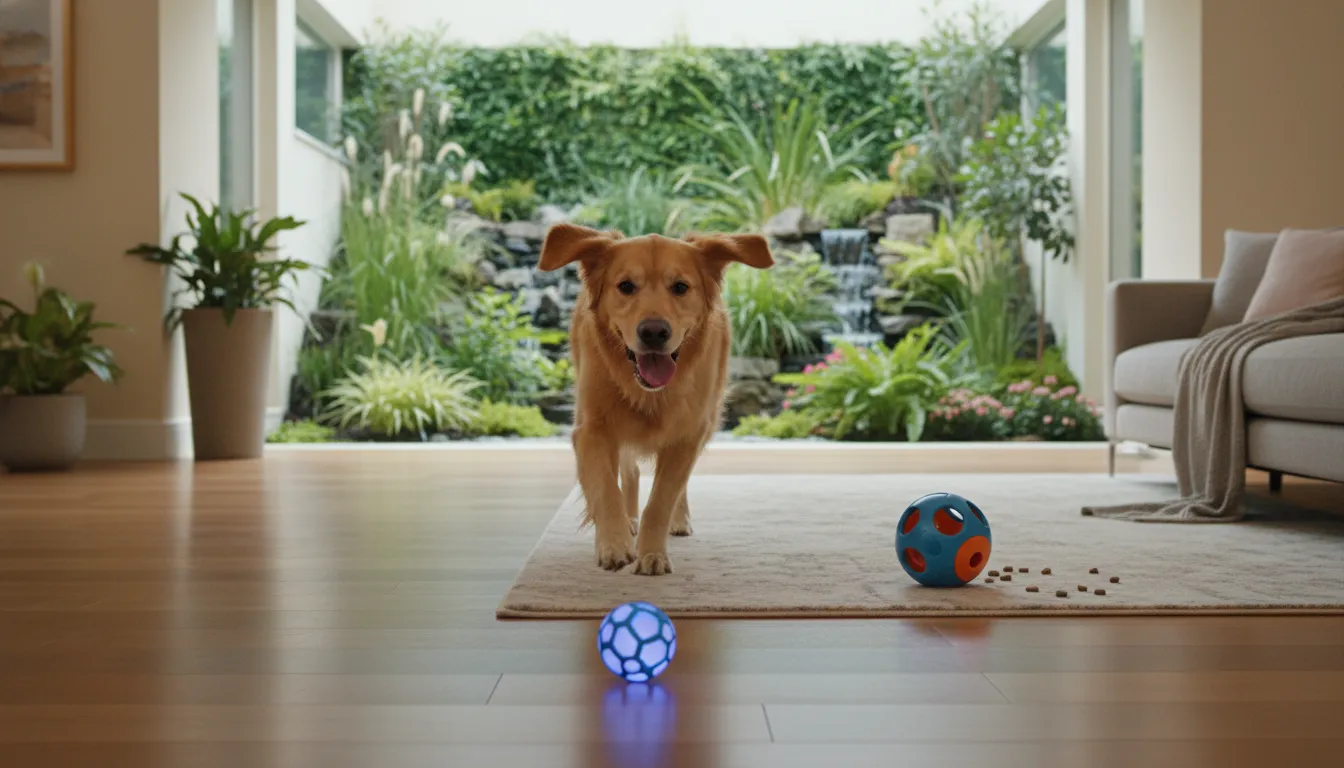
Interactive dog toys give bored dogs a useful job by making them chase moving balls, work for food, respond to sounds, or solve simple puzzles. Rolling balls encourage movement, while squeaky toys add sound that can hold a dog's attention during supervised active play without requiring a large yard. Puzzle feeders reward patient problem-solving and can turn an ordinary meal into a slower, more engaging activity for dogs that enjoy food rewards. This play supports enrichment, which Ohio State University says can increase physical activity and normal behavior while meeting physical and psychological needs. Choose a toy matching size, chewing style, skill level, and play habits; inspect it often and remove it when damaged after every play session.
First, we need to answer a basic question: What are interactive dog toys? Then we can match rolling balls, puzzle feeders, and squeaky toys to your dog's habits while keeping play safe and your budget in view. The path begins with
What are interactive dog toys?
Interactive dog toys are playthings that respond to a dog's actions or ask the dog to complete a task. Unlike a basic toy that stays still, they create an active back-and-forth experience. A dog may chase movement, find treats, solve a puzzle, or react to a sound.
These toys engage the mind and body at the same time. Some encourage running and pouncing, while others reward sniffing, pawing, chewing, or careful problem solving. The goal is not to keep a dog busy at any cost. It is to offer play that fits the dog's natural interests.
How interactive play works
Each toy creates a simple action and reward loop. A puzzle may release food after a dog moves a piece. A squeaky toy makes a sound when bitten, while a moving ball changes direction when touched. That response gives the dog a reason to keep exploring.
This type of play is a form of environmental enrichment. The Ohio State University Indoor Pet Initiative explains that enrichment supports physical activity and normal, species-typical behavior. Good toys give dogs safe ways to sniff, chase, catch, dig, and work for food.
Common types of interactive dog toys
Interactive dog toys come in several practical forms. The right type depends on how a dog likes to play, whether food is involved, and how much supervision is available.
- Puzzle and treat toys: Dogs move parts, sniff, or paw to reach food.
- Moving toys: Rolling or bouncing toys invite chasing, catching, and pouncing.
- Sound toys: Squeaks or other sounds reward biting and active play.
- Independent-play toys: These respond without constant help from a person.
For example, slow feeder puzzle toys combine a food challenge with play. Automatic rolling balls support active, independent play, while squeaky toys add sound to a game. Many dogs enjoy more than one type, so a small rotation can keep play fresh.
Why bored dogs need engaging play
A bored dog may look for its own activity, which can include chewing household items or pestering people. Interactive toys give that energy a clearer outlet. They can add useful activity between walks, during quiet indoor time, or when a dog needs solo play.
The toy should still match the dog's size, chewing style, and skill level. A challenge that feels impossible may cause frustration, while an easy one may lose its appeal fast. Start with a simple option, watch how the dog responds, then adjust the difficulty.
Owners can explore the Best Sellers collection to compare puzzles, moving toys, and sound-based options. Focus on a toy that suits the dog's habits and makes play both active and rewarding.
Why do bored dogs need mental stimulation?
Boredom is more than a dog having nothing to do. Dogs need safe ways to sniff, search, chew, move, and solve simple problems. When their days lack these outlets, they may seek their own activities around the home.
That self-made fun can include chewing household items, digging, pacing, or barking for attention. These actions do not always prove boredom, but they can signal that a dog's daily routine needs a closer look.
Signs your dog may need more enrichment
Look for patterns rather than one isolated action. A dog that chews a shoe once may simply enjoy its smell. Repeated restless or destructive behavior, especially during quiet parts of the day, can point to an unmet need.
- Pacing, whining, or barking when normal needs have been met.
- Chewing furniture, shoes, or other off-limits items.
- Digging at rugs, bedding, or the yard more often.
- Following family members constantly and demanding play.
- Losing interest in toys that never change.
A new behavior can also have a health cause. Talk with your veterinarian if a change is sudden, severe, or paired with pain or appetite changes. This helps rule out medical concerns before you adjust the play routine.
How enrichment supports calmer behavior
Ohio State University defines environmental enrichment as changing an animal's surroundings to support physical activity and normal, species-typical behavior. For dogs, useful activities can create safe outlets for sniffing, hunting, catching, digging, running, and resting.
Enrichment also gives a dog choices and occupies its time. In one study, interactive enrichment increased relaxation behaviors and reduced behaviors linked with stress and alertness. The published study suggests that several types of enrichment can offer positive behavior benefits.
These findings do not mean that a toy fixes every behavior problem. Mental activity works best as one part of a balanced routine. Dogs still need suitable exercise, rest, training, social time, and care matched to their age and health.
Practical enrichment on a budget
Useful enrichment does not need to be costly or complex. Start with short play sessions, then watch how your dog responds. Rotate a few interactive dog toys instead of leaving every option out all day. A familiar toy can feel fresh after time away.
Match the activity to a natural behavior your dog enjoys. Scatter part of a meal for sniffing, play a gentle search game, or offer a safe toy for chasing. Food-motivated dogs may enjoy slow feeder puzzle toys that add a simple challenge at mealtime.
Keep early challenges easy enough for success. Enrichment should hold a dog's interest without causing fear or frustration. Supervise new activities, check toys for damage, and adjust the difficulty as your dog learns. The goal is steady engagement, not a test your dog must pass.
Best types of interactive dog toys for different play styles
Match the toy to the way your dog plays
The best interactive dog toys fit the actions your dog already enjoys. Some dogs love to chase movement, while others prefer sniffing, chewing, or working for food. Matching the toy to that play style makes it more likely that your dog will stay engaged.
Variety matters because enrichment can include food, new objects, sensory play, social time, and positive training. Ohio State University explains that effective environmental enrichment should engage the animal without causing fear. Start with a simple challenge, then adjust the toy as your dog learns.
| Toy type. | Best for. | What to watch. | Suggested Our Pets Place pick. |
|---|---|---|---|
| Rolling ball. | Dogs that chase moving objects or play alone. | Use on a clear floor and check that the size fits your dog. | |
| Puzzle feeder. | Food-motivated dogs that enjoy solving a task. | Begin with an easy setup to limit frustration. | |
| Slow feeder. | Dogs that need a longer, more active mealtime. | Choose grooves your dog can reach with ease. | Interactive Slow Feeder Puzzle Toy. |
| Squeaky toy. | Dogs drawn to sound and active play. | Stop play if the squeaker becomes loose. | Interactive Squeaky Pet Toy. |
| Chew ball. | Dogs that prefer chewing, bouncing, and fetch. | Inspect often for cracks or missing pieces. | Interactive Bouncy Chew Ball. |
| Plush toy. | Gentle players that like carrying or cuddling. | Supervise dogs that tear fabric or pull stuffing. | Plush toy from the interactive toy range. |
| Treat toy. | Dogs that like sniffing, pawing, and working for rewards. | Count treats as part of the daily food plan. | Treat-dispensing interactive toy. |
Food play versus movement play
Food-based toys suit dogs that focus quickly when a snack is involved. Puzzle feeders, slow feeders, and treat toys turn a routine meal into a small task. They can prompt a dog to sniff, paw, push, and search before eating.
Movement toys serve a different need. Rolling balls and chew balls invite chasing, catching, chewing, or fetching. Squeaky toys add sound, while plush toys suit dogs that prefer carrying and gentle play. Try both styles on different days instead of expecting one toy to do every job.
Watch how your dog responds during the first few sessions. A good match holds interest without making the task too hard. If your dog walks away, simplify the setup or switch to a play style that feels more natural.
Choosing for size, chewing habits, and supervision
Size and play strength matter as much as toy type. A large dog may need a bigger toy that is harder to swallow. A strong chewer needs a toy made for chewing, while a gentle dog may enjoy a plush option.
No toy is a substitute for basic checks. Inspect seams, squeakers, moving parts, and chew surfaces before each session. Remove any toy that breaks, sheds pieces, or no longer fits its intended use.
Supervise a new toy until you know how your dog uses it. Rotate a few well-matched options to keep play fresh without filling the home with unused items. This practical mix gives your dog different ways to work, move, and settle.
How to choose safe interactive dog toys
Safe interactive dog toys match your dog's size, play style, and skill level. A good fit keeps play fun without making the task too easy or frustrating. Use the steps below to compare choices and set up each new toy.
Fit the toy to your dog
Start with your dog's usual play habits. A gentle puzzle solver needs a different toy than a strong chewer who loves to chase. Size matters too. Choose a toy that your dog cannot fit fully inside their mouth.
Match the size and chewing style. Pick a shape your dog can grip without swallowing. For hard chewers, favor sturdy one-piece designs over toys with small parts. Softer players may enjoy plush or squeaky options under close watch.
Check the materials and construction. Read the product details and care notes before buying. Look for smooth edges, secure seams, and parts that stay firmly attached. Skip a toy if its material or build is not clearly described.
Supervise the first play sessions. Watch how your dog bites, paws, and moves the toy. This shows whether pieces may loosen or the toy rolls into unsafe spaces. Even sturdy bouncy chew balls need an early fit check.
Set an easy starting point. Show your dog how the toy works, then let them try. Add easy-to-reach treats when using a puzzle. Increase the challenge only after your dog solves it calmly.
Clean food toys after use. Remove leftover food before it dries inside grooves or slots. Follow the listed washing directions and let the toy dry fully. Check food chambers closely before the next session.
Inspect and remove damaged toys. Check for cracks, torn seams, sharp edges, and loose pieces after play. Put worn toys away at once. Replace them rather than waiting for more damage.
Keep the challenge enjoyable
A safe toy should hold your dog's interest without causing fear or stress. Ohio State University notes that enrichment must engage the animal and should not make it fearful. Its dog enrichment guidance also supports choosing activities around a pet's needs and habits.
Watch your dog's body language during play. Pause if they bark at the toy, avoid it, or chew it harder as they struggle. Make the task easier, add help, or switch activities. Some dogs do better when slow feeder puzzle toys start with food placed in easy spots.
A simple safety routine
Keep interactive play in a clear area where you can see the toy and your dog. Store toys between sessions, especially when they hold food or include moving parts. A quick check before and after play helps you catch wear early. It also keeps the next session ready and fun.
Are puzzle feeders considered interactive dog toys?
Yes, puzzle feeders and slow feeders are interactive dog toys because a dog must work with the toy to reach food. Instead of serving a meal in an open bowl, these feeders add simple choices, movement, or problem solving. They turn a daily routine into a useful mental task.
Food-based play at meal time
Ohio State guidance on food-based enrichment explains that pets can hunt for hidden food, then chase and consume it. A puzzle feeder brings part of that process into a safe, easy-to-manage format. It can offer a calmer challenge than fetch, tug, or a fast-moving toy.
At meal time, place the dog's usual food in the feeder and let the dog uncover each piece. At treat time, add a small reward and use the feeder as a short play session. This gives food-motivated dogs a clear reason to sniff, nudge, paw, and keep trying.
Puzzle feeders and slow feeders
A puzzle feeder bowl adds a problem for the dog to work through during feeding. A slow feeder puzzle toy pairs mental engagement with slower food intake. Both are useful for owners who want interactive dog toys that fit into an existing routine.
The best fit depends on how your dog approaches a challenge. Some dogs enjoy moving pieces or searching through sections. Others do better with simple raised paths that make them pause and work around the bowl. Either style can make food feel more like an activity than a quick handout.
A calmer kind of challenge
Food puzzles can suit dogs that enjoy solving a task without running around the home. There is no need for loud sounds or quick motion. Licking, nudging, and searching keep the dog involved while the food sets a steady pace. The dog has one clear goal: find the food without getting overwhelmed.
Start with an easy setup and let the dog learn how the feeder works. Show where a few pieces sit, then allow time for sniffing and trial. If the dog gets stuck or walks away, make the next round easier. Good enrichment should hold interest without causing fear or frustration.
Use part of your dog's normal meal when you want to avoid adding extra treats. Wash the feeder after use, and check it for damage before the next session. Supervise early sessions to see whether the size, shape, and challenge suit your dog's play style.
Interactive dog toys by age, size, and chewing style
The right interactive dog toys should suit your dog's current body, habits, and confidence. A toy that fits one dog may frustrate another or create an avoidable safety risk. Start with an easy challenge, then adjust based on how your dog plays.
Matching toys to age and size
Puppies often need simple toys that reward gentle chewing, chasing, or basic problem solving. Choose soft yet sturdy materials, and check them often as adult teeth come in. Adult dogs may enjoy harder puzzles or toys that move in less predictable ways.
Senior dogs can still benefit from play, but comfort should guide the choice. Try lighter toys, easy-to-reach treat spaces, and puzzles with fewer steps. The goal is active interest, not a task that tires or annoys the dog.
- Small dogs: Pick a toy they can carry, push, or turn with ease. Make sure every part is too large to swallow.
- Large dogs: Look for a larger, sturdy toy that will not disappear inside the mouth. Avoid small loose parts.
- Any size: Check the product dimensions rather than trusting a broad breed label. Dogs of similar weight can play in different ways.
A suitable challenge should invite play without causing fear or ongoing frustration. Ohio State University notes that enrichment must engage the animal without making it fearful. If your dog walks away each time, make the activity easier.
Choosing for chewing style
Gentle players may enjoy plush puzzles, squeakers, rolling toys, or treat games. Dogs that like chase-and-catch play may prefer movement over chewing. Match the action to what keeps your dog calmly involved.
Strong chewers need dense, durable designs with no easy-to-pull tabs or weak seams. A correctly sized bouncy chew ball can support chewing and fetch. No toy is truly indestructible, so watch for damage during every play session.
- Choose plush or sound-based toys for gentle, supervised players.
- Choose sturdy rubber-like shapes for dogs that bite and hold.
- Avoid thin pieces, exposed stitching, and parts your dog tries to remove.
Supervision and simpler options
Inspect each toy before and after play for cracks, tears, or loose pieces. Discard it when damage could let your dog swallow a part. Stay nearby when introducing any new toy, even if your dog usually plays gently.
Choose a simpler toy when your dog paws, bites, or leaves without learning the intended action. Easy puzzle feeder bowls can be a practical starting point. Increase the challenge only after your dog solves the current task without stress.
How to keep your dog entertained without overspending
Keeping your dog busy does not require a new toy every week. A small mix of interactive dog toys can support active play, quiet focus, and meal-time challenges. Aim to use each item in more than one useful way.
A simple toy rotation
Start with a few toys that serve different needs, then put some away. Swap the available toys every few days so an older favorite can feel fresh again. This plan also shows which textures, sounds, and play styles hold your dog's interest.
- Use a ball or tug toy for active play together.
- Offer a puzzle or food toy when your dog needs quiet focus.
- Keep one comfort toy near your dog's usual rest spot.
- Remove damaged toys and check the rest during each swap.
Rotation helps you focus on value instead of buying every new option. Choose items your dog will use often and that fit its size and play habits. If a toy gets ignored, try it in a new game before replacing it.
Meal-time enrichment
Part of your dog's regular meal can become an activity, with no extra treat budget needed. The Ohio State University notes that food-based enrichment can prompt hunting, chasing, catching, and eating behaviors. Hide a food-filled toy nearby, or let your dog work for kibble during a calm indoor session.
For another option, use puzzle feeder bowls to add a simple challenge at meal time. Begin with an easy setup so your dog stays interested rather than upset. Watch the first few sessions, then change the challenge based on how your dog responds.
Balance food puzzles with active games and rest. A short fetch session can use physical energy, while a puzzle offers slower mental work. Quiet chewing or a familiar comfort toy can then help shift the day toward calm time.
Value-first shopping
Before buying, decide what gap the next toy should fill. You may need a fetch option, a quiet puzzle, or a toy for solo play. Browsing a curated Best Sellers collection can narrow the choice and make comparison easier.
Look at likely use, play style, and fit before focusing on novelty. One flexible toy that joins several routines may offer more value than several items used once. Our Pets Place confirms a 30-day money-back guarantee, which can help shoppers compare toy options with more confidence before checkout.
Frequently Asked Questions
Are interactive dog toys good for bored dogs?
Yes, interactive dog toys can give bored dogs a useful mental and physical outlet. Rolling balls, puzzle feeders, and squeaky toys encourage chasing, sniffing, problem-solving, or active play. The Ohio State University Indoor Pet Initiative explains that enrichment supports normal behaviors and helps satisfy physical and psychological needs. Toys work best alongside walks, training, rest, and social time.
What is the best interactive dog toy for large dogs?
The best interactive toy for a large dog is appropriately sized, durable, and suited to that dog's play style. Choose a sturdy rolling ball for dogs that enjoy chasing or a strong puzzle feeder for food-motivated dogs. Avoid toys small enough to swallow. Check the toy before every session, and replace it if cracks, loose pieces, or sharp edges appear.
How do I choose safe interactive dog toys?
Choose a toy that matches your dog's size, chewing strength, age, and play habits. Avoid loose parts, sharp edges, and toys small enough to swallow. Supervise the first several play sessions and inspect the toy often for damage. The Ohio State University Indoor Pet Initiative also notes that effective enrichment should engage an animal without causing fear. Remove any toy that causes distress or frustration.
Are puzzle feeders considered interactive dog toys?
Yes, puzzle feeders are interactive dog toys because dogs must move pieces or solve a simple challenge to reach food. They can add mental engagement to mealtime and may encourage slower eating. Start with an easy puzzle, then increase the challenge as your dog learns. Count food placed inside toward the dog's normal daily portion, and clean the feeder after use.
How do I keep my dog entertained for hours?
Use a varied routine rather than expecting one toy to hold a dog's attention for hours. Rotate rolling balls, puzzle feeders, squeaky toys, walks, short training sessions, and rest periods. Introduce only a few toys at once so each remains interesting. Supervise toys that can be chewed apart, and schedule breaks if your dog becomes tired, frustrated, or overly excited.
Ready to Shop Interactive Dog Toys for Bored Dogs?
Waiting can leave your dog with the same dull routine, while extra energy may keep building during quiet time at home. Starting now lets you test one engaging option, watch how your dog responds, and adjust the play routine sooner. A thoughtful choice today also helps you avoid buying several toys that do not suit your dog's size, chewing style, or interests.
Ready to shop? Shop interactive dog toys and best sellers to compare boredom-busting options in one place, or browse the Dogs collection for more dog-focused picks. Contact Our Pets Place through the site if you need more product details before choosing. Then select a toy that fits your dog's size, chewing style, interests, and supervised play routine.


