


 support@ourpetsplace.com
A calming dog bed can give your pet a soft, defined place to curl up, but the right choice depends on more than a fluffy photo. Size, sleep position, bolster height, filling, and washability determine whether a bed becomes a daily favorite or an unused corner cushion. This guide explains what these beds can realistically offer and how to compare them without expecting a bed to treat anxiety.
Shop dog comfort essentials at Our Pets Place
Start with your dog's body and habits, not the product name. Measure your dog while resting, notice whether they curl or stretch, and decide how much cleaning the bed will need. Those details make it easier to find useful comfort at a sensible price.
What is a calming dog bed?
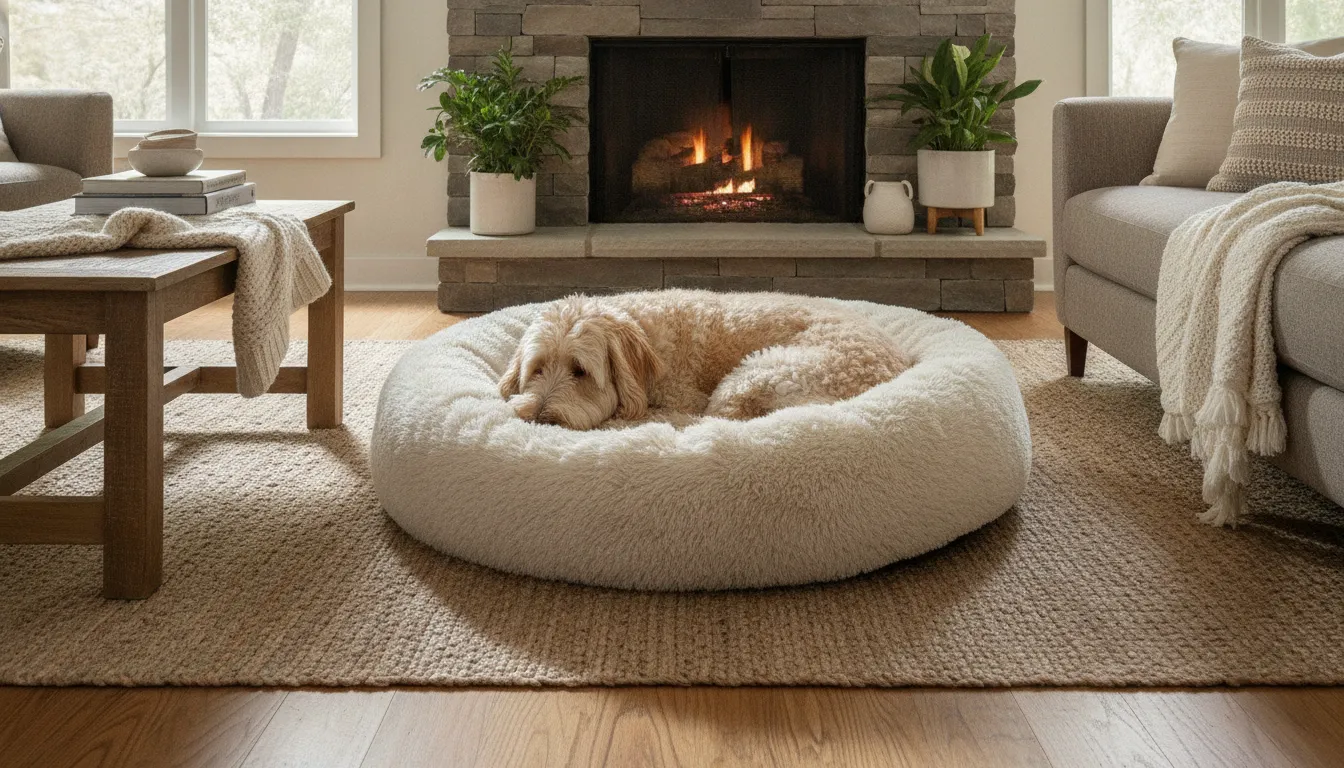
A calming dog bed is a soft resting bed designed to create a cozy, enclosed feel through features such as raised edges, plush fabric, or a nest-like shape. It may help a dog settle into a comfortable resting routine, but it is not a medical treatment for anxiety or behavior problems.
The word "calming" describes the bed's comfort-focused design rather than a guaranteed outcome. Many models use a round or oval shape, generous filling, and a raised rim. Together, those features can give a dog somewhere warm to lean, curl, and rest away from household activity.
Why the shape matters
A defined edge gives some dogs a clear boundary around their resting spot. Curlers may tuck against the rim, while dogs that like to rest their chin above the bed can use a bolster as a pillow. Flat mats offer more open space, but they do not create the same nest-like feel.
What a bed can and cannot do
A comfortable bed can support sleep and provide a consistent place for quiet time. It cannot diagnose, prevent, or treat anxiety. If your dog shows persistent distress, destructive behavior, trembling, escape attempts, or sudden changes in sleep, speak with a veterinarian or qualified behavior professional. The American Kennel Club also recommends professional guidance when anxiety affects a dog's quality of life.
Think of the bed as one part of a supportive routine that may also include exercise, enrichment, predictable schedules, and veterinary advice when needed.
How do bolsters and faux fur change comfort?
Bolsters provide an edge to lean against, while faux fur adds warmth and softness. These features can suit dogs that curl up or seek cozy surfaces, but they are not ideal for every pet or climate.
Raised bolsters create support and boundaries
Bolsters are the padded walls around all or part of a bed. A high, continuous rim can feel snug to a small dog that curls tightly. A lower bolster or open-front design is easier for a senior dog, a short-legged breed, or a pet with limited mobility to enter.
Press the bolster before buying if possible, or read the product details carefully. A lightly filled rim may flatten quickly under a dog's head. A firmer rim holds its shape better, but an overly rigid edge can reduce usable sleeping space.
Faux fur adds warmth but needs care
Long-pile faux fur feels soft and may appeal to dogs that enjoy warm surfaces. It can also trap shed hair, crumbs, and moisture. In hot climates or for thick-coated breeds, a shorter plush or breathable fabric may be more comfortable.
Check whether the entire bed or only its cover can go in the washing machine. Dense filling takes longer to dry, and damp inner material can develop odors. For easier upkeep, look for removable covers, clear care instructions, and durable seams.
How do you choose the right calming dog bed size?
Measure your dog in their usual sleeping position, then add enough room for comfortable movement. Brand size labels vary, so use the listed interior dimensions instead of relying only on small, medium, or large.
Measure the sleeping footprint
- Wait until your dog is resting naturally.
- Measure from the nose to the base of the tail.
- Measure the widest point across the body or curled position.
- Add about 6 to 10 inches to allow room to reposition.
- Compare that result with the bed's interior sleeping area.
Exterior dimensions can be misleading because thick bolsters take up space. A 30-inch round bed with a deep rim may provide a much smaller usable area. When two sizes seem suitable, the larger option is usually safer for a dog that stretches or changes positions often.
Match the bed to sleep style and mobility
Curlers often enjoy round nests with a continuous rim. Stretchers usually need an oval, rectangular, or open-front bed. Dogs that sleep in several positions benefit from extra room and a lower edge.
For older dogs or pets with stiff joints, entry height matters as much as overall size. Look for an open front or low step-in point. A supportive foam base may also be more useful than very soft loose filling that shifts under the dog's weight. For a broader look at shapes and support, read the best dog bed guide.
Compare common calming dog bed styles
The best style depends on how your dog sleeps, how warm they run, and how often the bed needs cleaning. No single shape works for every dog.
| Bed style | Often suits | Watch for |
|---|---|---|
| Round nest with full bolster. | Dogs that curl tightly or lean into an edge. | Smaller interior area and higher entry. |
| Oval or rectangular bolster bed. | Dogs that curl and stretch. | Bulky covers and uneven filling. |
| Open-front bolster bed. | Senior, short-legged, or mobility-limited dogs. | Less of an enclosed feel. |
| Flat plush mat. | Stretchers, crates, and easy transport. | No raised edge for leaning. |
| Covered cave bed. | Small dogs that like to burrow. | Heat buildup and limited visibility. |
Also consider where the bed will live. A lightweight nest may be easy to move but slide on smooth floors. A larger foam bed may stay put but be difficult to wash. If the bed will sit in a busy family room, a non-slip bottom and washable cover are especially useful.
Compare popular pet products in Best Sellers
What features matter before you buy?
Prioritize a safe fit, durable construction, practical cleaning, and materials suited to your dog's habits. Decorative details matter less than the features you will use every day.
Washability and construction
Read the full care label before purchasing. "Washable" may mean the cover is removable, the whole bed is machine washable, or only spot cleaning is recommended. If accidents, muddy paws, or heavy shedding are common, a removable machine-washable cover can save time.
Inspect or research seams, zippers, and filling. Covered zippers help limit chewing access. Reinforced seams can improve durability, but no plush bed is chew-proof. A dog that tears and swallows fabric or filling should use a more durable sleep surface under supervision.
Base support and floor grip
Very soft fiberfill creates a fluffy look but may compress over time. Foam tends to provide a more stable base, although quality and thickness vary. Match the base to your dog's weight and comfort needs rather than assuming thicker is always better.
A non-slip bottom can help on tile, wood, or laminate. It is particularly useful for dogs that jump into bed quickly or have uncertain footing. Keep the surrounding floor clear so the bed does not become a trip hazard.
A practical feature checklist
- Interior dimensions fit the dog's normal sleep position.
- Entry height works for the dog's legs and mobility.
- Fabric suits the dog's coat and room temperature.
- Care instructions match your washer and routine.
- Seams, zippers, and filling are appropriate for the dog's chewing habits.
- The base has enough grip and support for its location.
- The return policy gives you a reasonable path if the fit is wrong.
Our Pets Place shoppers can compare the washable plush dog bed with other items in the full pet product collection. Check current product details and measurements before ordering because features and availability can change.
How should you introduce a new bed?
Place the bed in a familiar quiet area and let your dog explore it at their own pace. A gradual, positive introduction is more useful than forcing the dog to stay on it.
- Put the bed near a place where your dog already rests.
- Allow sniffing and exploration without pressure.
- Reward voluntary interest with calm praise or a favorite treat.
- Add a familiar washable blanket if your dog enjoys one.
- Keep the location consistent for several days.
Some dogs use a new bed immediately. Others need days or weeks. Avoid moving it repeatedly during the introduction. If your dog ignores it, check for simple causes such as heat, unstable footing, a high entry, an exposed location, or too little sleeping room.
Supervise early use if your dog chews bedding. Remove damaged material promptly, especially if filling becomes accessible. Clean the bed according to its label and dry it fully before returning it to your pet.
A calming dog bed buying checklist
A good purchase fits the dog, the room, and the owner's cleaning routine. Use this quick review before adding a bed to your cart.
- Fit: You measured the dog's resting footprint and checked interior dimensions.
- Sleep style: The shape supports curling, stretching, leaning, or burrowing as needed.
- Access: The entry is manageable for the dog's height and mobility.
- Temperature: The fabric will not be too warm for the dog's coat or climate.
- Cleaning: The cover or full bed can be washed using equipment you have.
- Durability: Construction matches the dog's digging and chewing habits.
- Expectations: You are buying a comfortable resting place, not an anxiety treatment.
Price matters, but the lowest-cost bed is not a bargain if the dog cannot fit or the cover is impractical to clean. Compare dimensions and care requirements first, then look for value. Browse Trending Deals for current pet-product offers, and review the return and refund policy before buying.
Frequently asked questions
Do calming dog beds really work?
They can provide a cozy, consistent resting spot that some dogs enjoy. Results vary by dog, and a calming dog bed should not be expected to treat anxiety. Seek veterinary guidance for persistent distress or behavior changes.
What shape is best for a dog that curls up?
A round or oval nest with a raised bolster often suits a dog that curls. Measure the curled sleeping footprint and check interior dimensions because thick bolsters reduce usable space.
Should a calming dog bed have faux fur?
Faux fur can add warmth and softness, but it also collects hair and may feel too warm for some dogs. Choose a pile length and fabric that fit your dog's coat, climate, and cleaning needs.
How often should you wash a dog bed?
Wash it whenever it is visibly dirty or develops odor, and follow the care label. Homes with shedding, accidents, allergies, or outdoor activity may need more frequent cleaning. Dry the bed completely before use.
Can a calming bed replace help from a veterinarian?
No. A bed is a comfort product, not a medical or behavioral treatment. Contact a veterinarian when distress is severe, persistent, sudden, or affecting your dog's quality of life.
Find a comfortable fit for your dog
A useful calming dog bed starts with realistic expectations and a careful fit. Measure your dog, choose a shape that matches their sleep style, and confirm that cleaning the bed will be practical. The right bed will not solve every behavior concern, but it can become a comfortable and familiar place to rest.


