


 support@ourpetsplace.com
A well-chosen dog grooming kit makes routine coat care, baths, nail upkeep, and cleanup easier to handle at home. The goal is not to recreate a grooming salon. It is to keep a small, useful set of tools matched to your dog's coat, size, and comfort level, then use those tools patiently between professional appointments.
Shop the all-in-one pet grooming kit to put practical home-care tools within easy reach.
A basic dog grooming kit should contain a coat-appropriate brush, a metal comb, dog nail clippers or a grinder, dog-safe shampoo, absorbent towels, and a nonslip bathing surface. Add only the tools your dog's coat and routine require. Use them for gentle maintenance, and stop when a task causes distress or requires skills you do not have.
That simple approach helps budget-conscious pet owners avoid buying a drawer full of rarely used accessories. It also makes each session more predictable for your dog. Use this guide to build a focused kit, choose the right brush, and recognize when professional help is the safer choice.
What belongs in a dog grooming kit?
The essentials are a suitable brush, finishing comb, nail tool, dog-safe bathing supplies, and towels. These items cover the repeatable jobs most owners can perform comfortably at home. A storage bin or bag keeps everything ready, while a few treats can help create a calm routine.
Core coat-care tools
- Slicker brush: separates loose fur and small tangles in many medium, long, curly, or dense coats. Use light pressure.
- Bristle brush or grooming glove: lifts surface debris and loose hair from short, smooth coats.
- Undercoat rake: reaches loose undercoat on double-coated dogs. It is not necessary for every coat.
- Metal comb: acts as a final check after brushing. If it catches, work on that small area gently rather than pulling through it.
Nails, bathing, and cleanup
Choose sharp clippers sized for your dog or a nail grinder that feels comfortable in your hand. For bathing, keep dog-safe shampoo, a nonslip mat, a rinsing cup or sprayer, and at least two absorbent towels nearby. A dedicated dog and cat pet towel can help make drying more orderly.
Keep the kit focused. Clippers, specialty scissors, or powered dryers may not suit an inexperienced owner or a nervous dog. Buying fewer tools that you can use confidently is better value than choosing the largest bundle available.
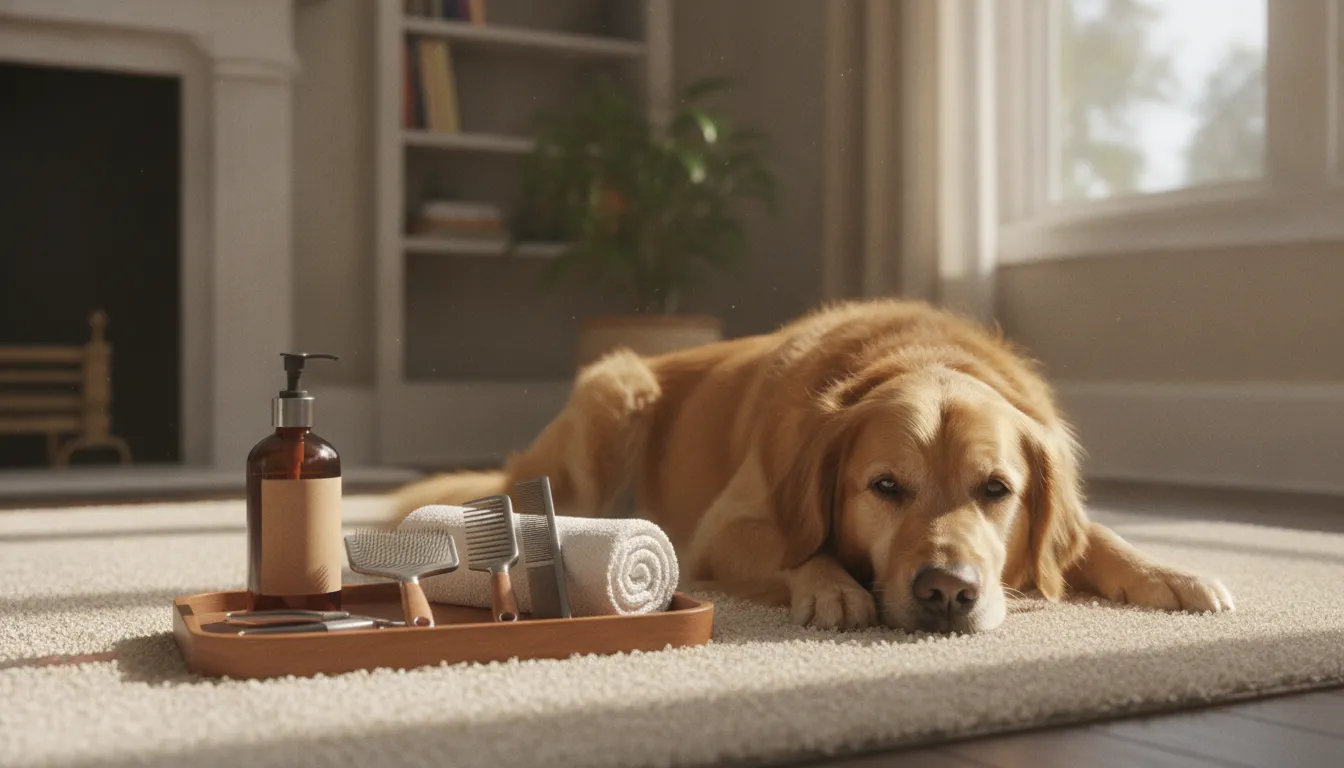
Choose brushes and combs by coat type
The best brush is the one designed for your dog's coat, not the one with the longest feature list. Using an unsuitable tool can make brushing ineffective or uncomfortable. Start with one primary brush and a finishing comb, then add another tool only when you identify a specific need.
. . . . . .| Tool | Often useful for | Main job | Use note |
|---|---|---|---|
| Slicker brush | Medium, long, curly, or dense coats | Loose fur and small tangles | Use gentle pressure |
| Bristle brush | Short, smooth coats | Surface hair and finishing | Brush with the coat |
| Grooming glove | Short coats or brush-shy dogs | Gentle loose-hair removal | Introduce slowly |
| Undercoat rake | Double coats | Loose undercoat | Do not force through mats |
| Metal comb | Many coat types | Final tangle check | Stop when it catches |
Short and smooth coats
A grooming glove or bristle brush is often enough for surface hair and debris. Short sessions can help a dog become familiar with being handled. Check the brush as you work, and remove collected fur so the tool stays effective.
Long, curly, and double coats
These coats usually benefit from section-by-section brushing. Work on a small area, then use a comb to check your progress. Never yank through a knot. Tight or skin-level matting is a reason to pause and seek professional help rather than experimenting with scissors.
Explore dog supplies that can support a practical care routine at home.
How do you use a dog grooming kit at home?
Set up first, keep the session short, and complete only the tasks your dog accepts calmly. A repeatable order reduces scrambling and helps your dog learn what to expect. If your dog pulls away, freezes, growls, or tries to bite, stop rather than forcing the session.
- Prepare the space. Choose a well-lit area with secure footing. Put every tool within reach before bringing your dog over.
- Start with calm handling. Touch the shoulders, legs, and paws briefly. Reward relaxed behavior and end early if your dog becomes uneasy.
- Brush in sections. Follow the direction of coat growth and use light pressure. Check the skin as you go without making health claims or trying to diagnose a concern.
- Comb to finish. A comb can reveal a small tangle the brush missed. Stop at resistance and work gently around it.
- Bathe only when needed. Use dog-safe shampoo, protect footing, and rinse thoroughly.
- Dry and tidy up. Pat with towels, let tools dry fully, and store everything together for next time.
Build cooperation gradually
Not every grooming task must happen on the same day. A dog that accepts brushing may still dislike paw handling or bath time. Divide the routine into shorter sessions, pair each one with praise or a reward, and finish while your dog is still calm.
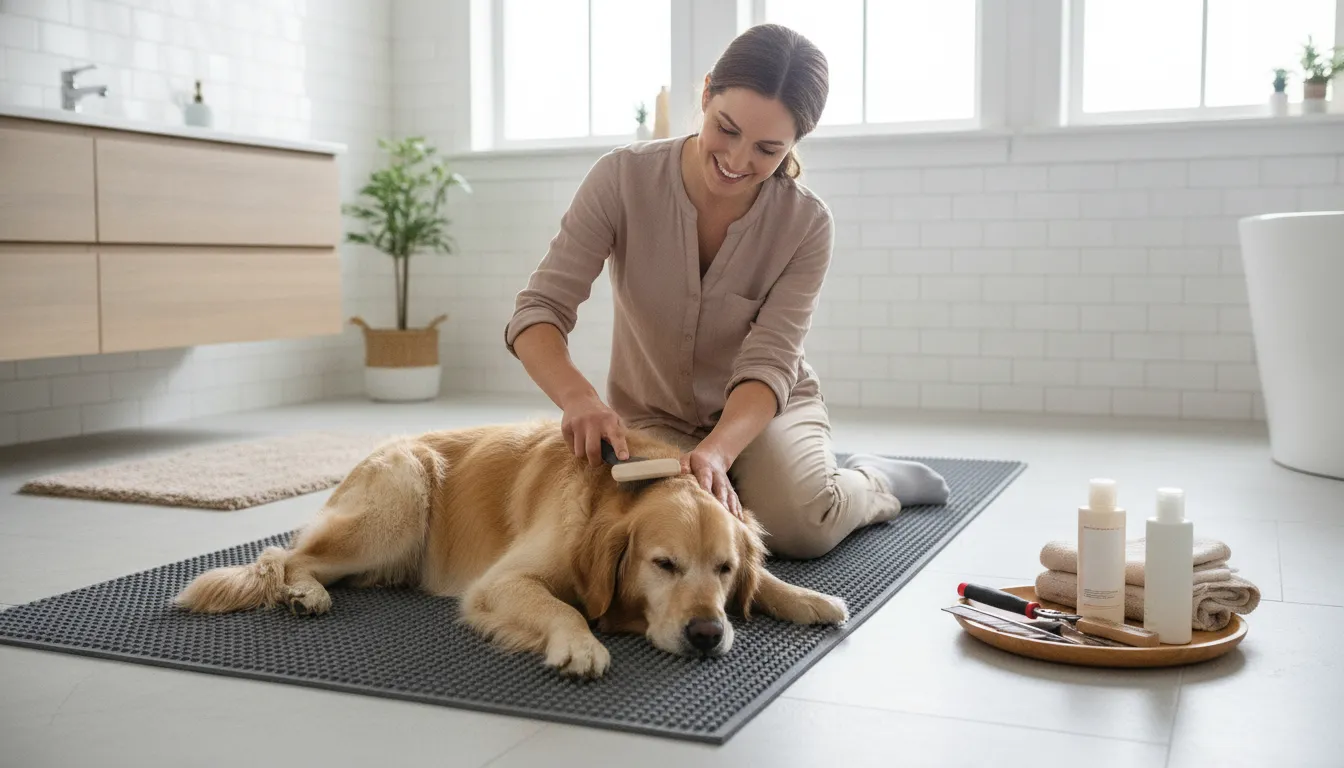
Bathing accessories that make home care easier
A nonslip surface, dog-safe shampoo, a controlled rinse, and absorbent towels do most of the work. Organize them before the bath begins. Leaving a wet dog unattended while searching for a towel creates avoidable stress and mess.
Prepare before turning on the water
Brush first so loose hair and minor tangles do not become harder to manage when wet. Place a nonslip mat or secure towel where your dog will stand. Keep water comfortably warm, and use only shampoo labeled for dogs. Avoid inventing a bathing schedule that ignores coat type, lifestyle, or guidance from a trusted professional.
Rinse, dry, and store supplies
Rinse carefully until the water is clear and no product remains in the coat. Pat rather than rub aggressively, especially on longer coats that tangle easily. Allow towels, brushes, and the storage container to dry before putting the kit away.
Our Pets Place focuses on a simple shopping experience and value-conscious product selection. That makes a task-first shopping method especially useful here. List the grooming jobs you can safely complete, select the core tool for each job, and ignore unrelated attachments. You can compare useful care items with other popular pet products in Best Sellers rather than purchasing accessories simply because they appear in a large set.
A useful kit can also reduce friction before bath time. When the same towel, brush, shampoo, and nonslip mat stay together, setup takes less time and you are less likely to leave a wet dog while searching for a missing item. This organization benefit is easy to overlook when comparing kits only by piece count.
Nail tools require careful handling
Choose a nail tool sized for your dog, introduce it slowly, and trim only when you know how to use it safely. Clippers make a quick cut, while a grinder removes a smaller amount at a time but introduces sound and vibration. The better choice depends on your control and your dog's comfort.
Clippers or grinder?
Clippers should feel stable and sharp. A grinder can offer gradual control, but some dogs dislike its noise. Let your dog investigate the tool while it is off. For a grinder, introduce the sound separately before bringing it near a paw.
Know when to stop
Do not rush because your dog has moved or become impatient. You can handle one paw, or even one nail, and return another day. If you cannot identify a safe trim point, if the nails are severely overgrown, or if your dog strongly resists paw handling, ask a qualified groomer or veterinarian for help.
This pause-first rule is part of building a responsible dog grooming kit routine. The kit should support safe maintenance, not encourage an owner to attempt every possible task.
When should you use a professional groomer?
Use professional help for severe matting, complex trimming, persistent distress, or any job beyond your ability. Home grooming is useful for routine upkeep, but it is not a replacement for a trained groomer or veterinarian when a task becomes difficult or a health concern appears.
- Tight or widespread mats: cutting or pulling at them can be risky.
- Strong fear or defensive behavior: growling, snapping, frantic movement, or repeated escape attempts mean the session should end.
- Precision trimming: work near the eyes, ears, paw pads, and other sensitive areas requires control and experience.
- Possible health concerns: unusual skin, ear, paw, or nail issues belong with a veterinarian, not a home-care experiment.
Professional appointments and home care can complement each other. Gentle brushing between appointments may help keep the coat manageable, while the groomer handles tasks that require specialized skills.
How to choose a dog grooming kit without overbuying
Start with the tasks you will perform every week or month, then buy tools for those tasks only. This is the most practical way to balance cost, storage, and usefulness. A small set that suits your dog will usually deliver more value than a large kit filled with unfamiliar attachments.
Use a simple buying checklist
- Match the coat: identify whether your dog has a short, long, curly, dense, or double coat.
- Prioritize control: choose handles and sizes that feel secure in your hand.
- Consider your dog: avoid noisy or complicated equipment if sound or handling creates stress.
- Check cleaning and storage: favor items that are easy to clean, dry, and keep organized.
- Skip unsupported extras: do not pay for attachments you cannot identify or use safely.
An all-in-one set may be convenient when its core tools match your needs. Buying individual items can be smarter when your dog's coat needs one specific brush or you already own part of the kit. Browse all pet products to compare options across care, feeding, accessories, and play.
Frequently asked questions about dog grooming kits
What is the most important tool in a dog grooming kit?
The most important tool is a brush suited to your dog's coat because brushing is a common home-maintenance task. Pair it with a metal comb for a final tangle check. The ideal brush varies by coat type, so there is no single best option for every dog.
Is it cheaper to groom your dog at home?
Home care can reduce the number of simple maintenance tasks you pay someone else to perform. However, savings depend on your dog's needs and the tasks you can handle safely. Professional grooming remains worthwhile for difficult coats, complex trims, or dogs that resist handling.
How often should you use a dog grooming kit?
Use frequency depends on coat type, shedding, activity, and the specific task. Short brushing sessions may happen more often than baths or nail care. Follow appropriate guidance for your dog rather than using a single schedule for every pet.
Are large dog grooming kits better?
Not automatically. A large kit is good value only when its tools match your dog's needs and your skills. A smaller kit with a suitable brush, comb, nail tool, bathing supplies, and towels is often easier to use and store.
Build a practical home grooming routine
A useful dog grooming kit is not defined by the number of pieces in the box. It is defined by how well each tool supports calm, repeatable care for your dog. Begin with coat care, bathing basics, a suitable nail tool, and organized storage. Add specialty items only when you have a clear reason.
Shop the all-in-one pet grooming kit or explore Our Pets Place for value-focused pet supplies that fit your routine.


